
What Is AI Email Personalization? (With Examples)
AI email personalization tailors every cold email to the prospect, not just a name swap. How it works, real examples, and what actually gets replies.
Cristian Frunze · Jul 15, 2026 · 8 min read
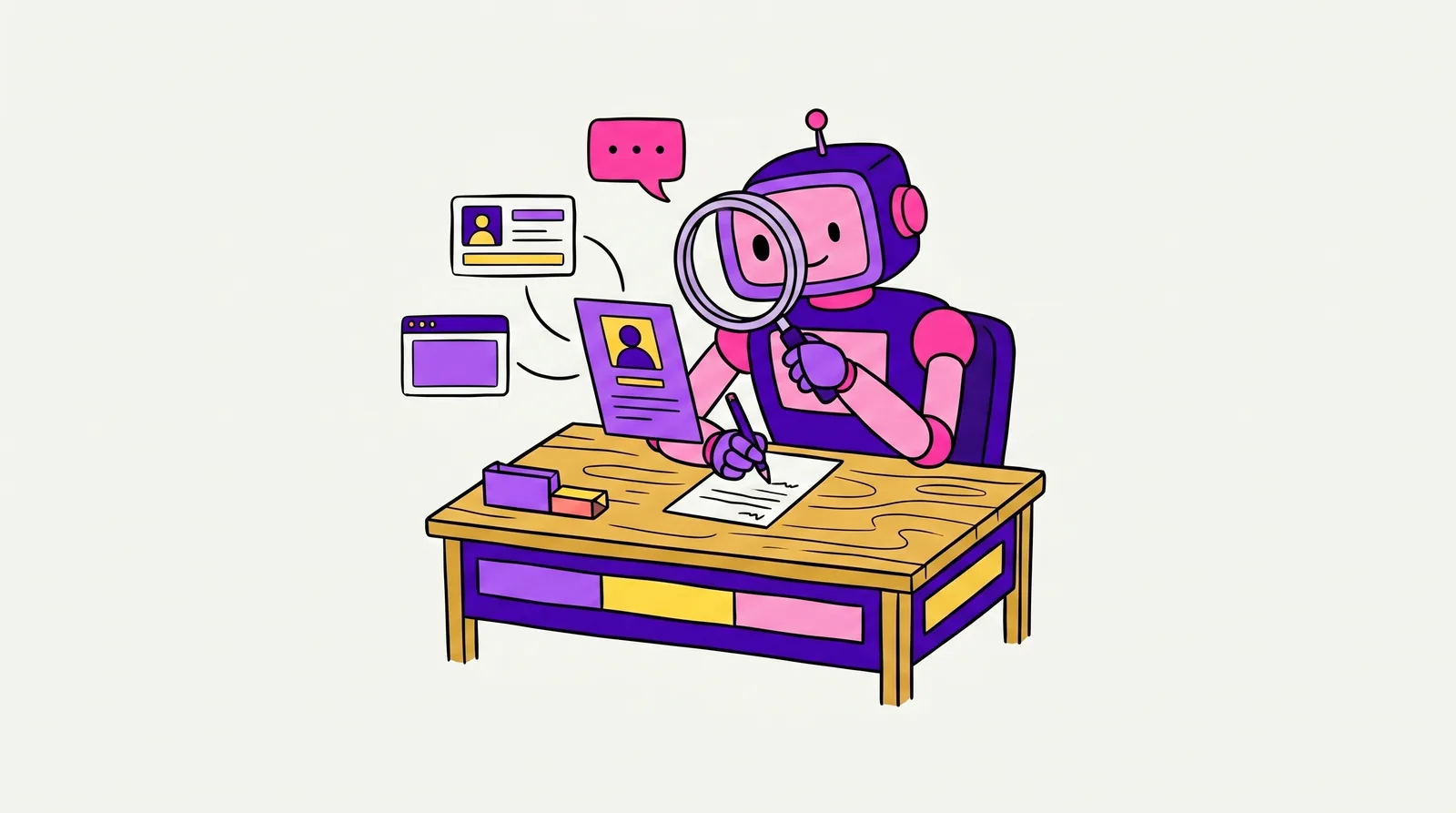
AI email personalization uses artificial intelligence to tailor every email to the individual recipient — pulling real details from their LinkedIn profile, company website, and recent activity to write relevant copy at scale. Done well, it reads like a human spent ten minutes researching you. Done badly, it produces the generic "AI spam" that prospects delete before the second line.
That gap — between personalization that books meetings and personalization that gets ignored — is the entire story of AI in cold email. Below: what AI email personalization actually is, how it works step by step, the four levels of it (with real examples), and the counterintuitive reason the most common approach can perform worse than sending nothing personalized at all.
What is AI email personalization?
AI email personalization is the use of machine learning and large language models to customize an email's content — subject line, opening, body, and call to action — for each individual recipient, based on data about that person and their company. Instead of one message blasted to a list, every prospect gets copy built around their specific context.
The important word is relevant, not just variable. A mail merge that drops a first name and company into a fixed template is automation, not personalization — the sentence wrapped around the variable is identical for everyone who receives it. Real AI personalization changes the substance of the message: the detail you reference, the angle you open with, the problem you name.
- The subject line — framed around the prospect, not your product.
- The first line — the hook that proves this isn't a blast.
- The relevance angle — why you're reaching out to them specifically.
- The value proposition — which benefit you lead with, matched to their role.
- The call to action — sized to how warm the prospect actually is.
How AI email personalization works (step by step)
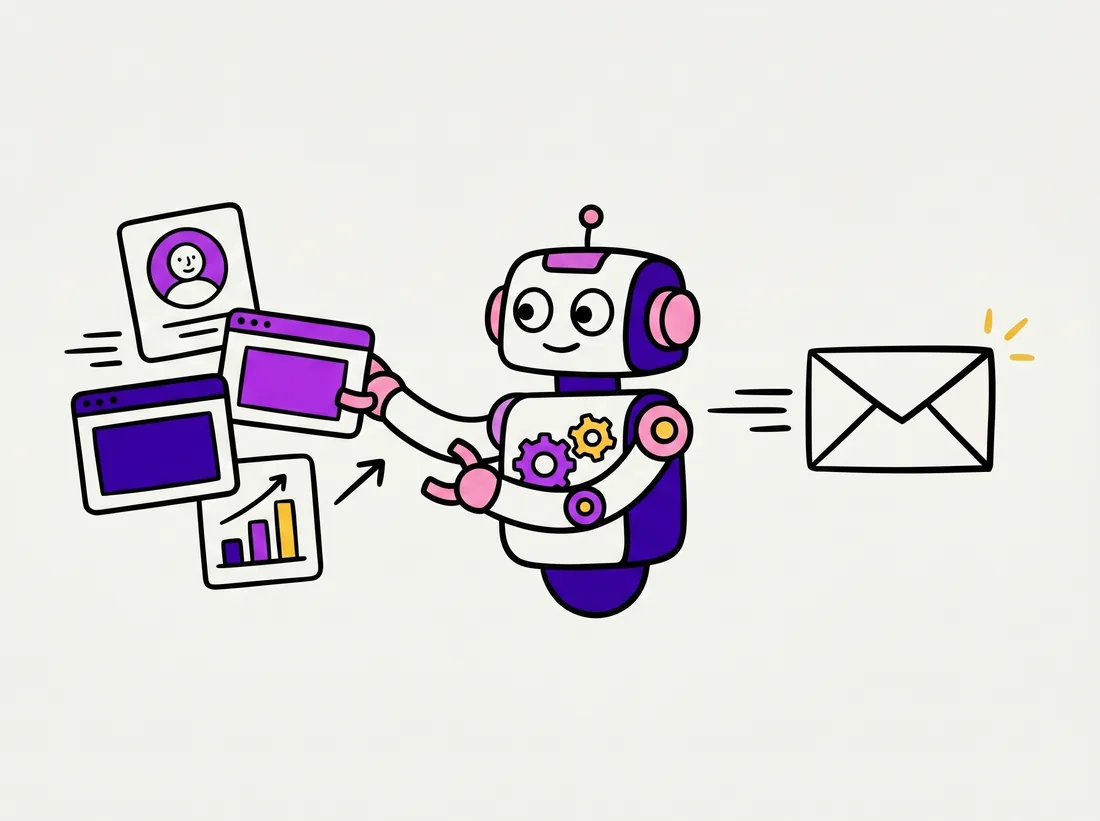
Under the hood, personalization is a pipeline, not a single button. It draws on real prospect data — a LinkedIn profile and recent posts, the company website and news, job title and seniority, tech stack, funding events, hiring signals — and turns it into one relevant message. Here's what happens between "I have a list of prospects" and "this person received an email that felt written for them."
- Enrich the prospect. Pull data from across the web — LinkedIn, the company site, news, funding databases, tech-stack detectors — into one profile.
- Find the signal that matters. Not every fact is worth using. A recent role change or product launch beats the company's founding year. The art is choosing the one detail that earns a reply.
- Draft from a framework. The best setups don't let AI invent the whole email. A human-written framework defines the structure, angle, and voice; AI fills the personalized parts for each prospect.
- Quality- and spam-check. Each draft is scanned — for spam triggers, for robotic "AI tells," and for whether the personalization is genuinely relevant or just name-dropping.
- Review and send. The email is reviewed, then sent from a properly warmed inbox so it actually lands where it can be read.
- Learn and iterate. Replies, clicks, and bounces feed back in, so the next batch is sharper than the last.
The four levels of AI email personalization (with examples)
Skip steps 2 through 4 — which is exactly what the cheapest "AI personalization" does — and you get email that's technically personalized and functionally spam. It helps to think about personalization in levels: each one references more, and more specific, information about the prospect. Here's what each sounds like reaching out to the same person — a Head of People at an HR-tech company.
| Level | What it sounds like — and how it performs |
|---|---|
| Level 1 — Merge fields | "Hi Sarah, I came across [Company] and was impressed by what you're doing in HR tech." Name and company dropped into a fixed template. Scalable, but prospects pattern-match it instantly — the baseline most "personalized" email never rises above. |
| Level 2 — Signal-based | "Saw [Company] just closed a Series A — scaling the team after a raise usually means onboarding gets messy fast." References a real trigger: funding, a new hire, a launch. Relevant, timely, still scalable, and a genuine step up in reply rates. |
| Level 3 — Research depth | "Your post last week on scrapping annual reviews stuck with me — especially the line about 'growth conversations, not ratings.'" Weaves specific, current detail across the email. Reads like a person did real homework. Where top performers live. |
| Level 4 — Human framework + AI | Everything in Level 3, but written to a tested framework in your founder's voice and quality-checked before it sends — relevant and human, across thousands of prospects. Where managed services like Ken operate. |
Good vs. bad AI personalization: a side-by-side
The difference is easiest to feel in a real before-and-after. Both of these emails were "personalized by AI." Only one earns a reply.
| Generic AI personalization | Genuine AI personalization |
|---|---|
| "Hi Sarah, I was impressed by [Company]'s work in HR tech…" | "Came across the culture manifesto you published last quarter — the bit about 'no performance reviews, only growth conversations' stuck with me." |
| References the company name and industry — true of ten thousand companies. | References a specific thing this person actually published. |
| Reads like a template with the variables swapped. | Reads like a human spent real time before writing. |
| Prospect's reaction: delete. Seen it a hundred times. | Prospect's reaction: curiosity. This one's actually about me. |
Why most AI email personalization underperforms
Here's the uncomfortable finding most vendors won't tell you: adding AI personalization can make your emails perform worse. We know because we tested it.
Across more than 500,000 emails — same copy frameworks, same audiences, three versions — we measured engagement (clicks plus replies). The results weren't subtle:
| Version | Engagement vs. baseline |
|---|---|
| No personalization (baseline) | 12% engagement rate |
| "Standard" AI personalization | -25% — worse than sending nothing personalized |
| Human framework + AI (Ken's approach) | +127% — more than double the baseline |
Relevance beats variables: how to get it right
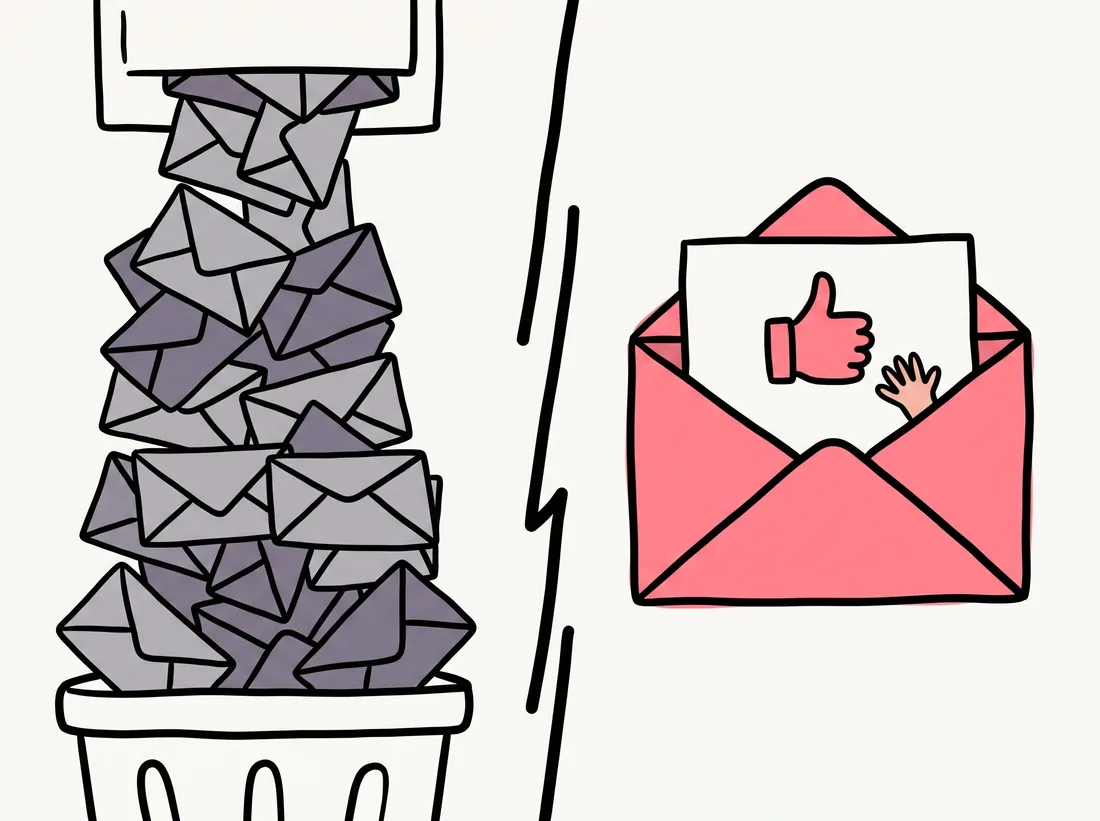
Why does naive AI personalization backfire? Because unsupervised AI produces tells prospects have learned to spot on sight: the hollow compliment ("I was impressed by your work"), the obvious template seams, the too-perfect phrasing no busy person actually writes. The moment a prospect clocks "this is AI," they trust the rest of the message less — so a clumsy attempt at personalization underperforms an honest, plain email.
The lesson: relevance and restraint beat a pile of variables. Personalization that's obviously machine-made is a negative signal, not a neutral one. The answer isn't "use more AI," and it isn't "go back to writing every email by hand" — it's using AI where it's strong (scale, data synthesis, speed) and humans where they're strong (judgment, voice, knowing which detail matters).
That's the model managed cold email services are built around, and it's why "done-for-you cold email" and "AI personalization" increasingly describe the same thing — the AI is the engine, but it's tuned and supervised by a team. It's exactly how we approach personalization at Ken: you can see the mechanics on our features page, or read our full guide to done-for-you cold email for how it fits into a campaign. In practice, doing it right looks like this:
- Start from a human-written framework. People set the structure, angle, and voice; AI fills the personalized parts. The email sounds like a thoughtful person wrote it — because one designed it.
- Personalize several points, not one. Subject line, opener, body, and PS — each tuned to the prospect, with real context woven throughout, instead of a single name swap.
- Use real, recent prospect data. Build every email from the prospect's actual LinkedIn, website, and recent activity — and reference what's genuinely relevant, not the first fact you find.
- Train the AI to avoid AI tells. Strip the overly formal phrasing, the filler compliments, the too-perfect sentences. Aim for how a busy founder actually writes.
- Quality-check every send. Scan each email for spam triggers and for whether the personalization is real or hollow — before it goes out, not after.
Frequently asked questions
What is AI email personalization in simple terms?
It's using AI to write each email around the specific person receiving it — their role, company, and recent activity — instead of sending everyone the same template. The goal is an email that feels researched and relevant, produced at scale.
How is AI personalization different from using merge tags?
Merge tags drop variables like a first name or company into a sentence everyone receives. AI personalization changes the substance — the hook, the angle, the example — based on who the person is. One is automation; the other is relevance.
Does AI email personalization actually improve reply rates?
Done well, yes — significantly. Done badly, it can backfire: in our own 500,000-email test, naive AI personalization performed 25% worse than no personalization, while a human-framework-plus-AI approach more than doubled engagement. Quality and relevance decide the outcome, not the mere presence of AI.
What data does AI use to personalize cold emails?
Most commonly a prospect's LinkedIn profile and recent posts, their company website and news, job title and seniority, tech stack, funding events, and hiring signals. Recent, specific data produces the most genuinely personal emails.
Can you personalize emails with AI without sounding like a robot?
Yes, but it takes supervision. The reliable recipe is a human-written framework and voice, AI filling the personalized parts, and a quality check that strips AI tells before sending. Unsupervised AI tends to produce the giveaways prospects delete on sight.
See AI personalization done right
AI personalization isn't magic, and it isn't spam — it's a system: the right data, a human-set framework, AI doing the per-prospect work, and a quality bar that never drops. That's the entire premise behind Ken AI. We run done-for-you cold email for B2B teams — human copywriters build the frameworks, our AI personalizes every email from real prospect data, and our own infrastructure makes sure it lands in the inbox.
If you'd rather book meetings than manage an AI stack, book a 30-minute founder call with Cristian at https://cal.com/cristian-frunze/demo. You'll see the backend, the data, and the campaigns closest to your ICP — and if it's not a fit, we'll tell you what to try instead.