
B2B Email Finder: A Credit Is Not a Lead
Finders sell credits. A Ken lead is a qualified contact with a valid email. Score Hunter, Apollo, and Clay on finished output, not lookups.
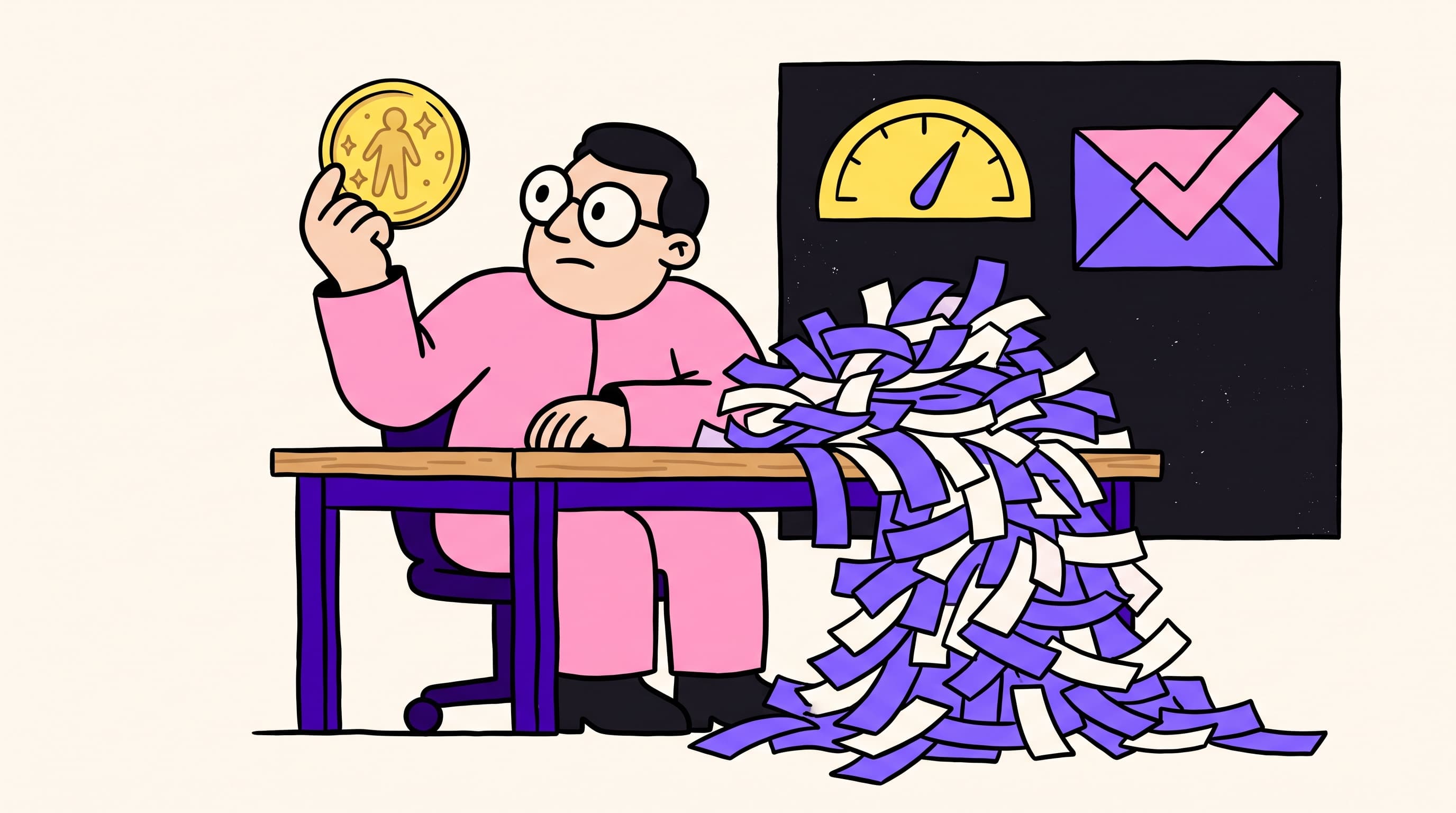
A B2B email finder returns a guessed or stored address from a name, domain, or LinkedIn URL. That is a lookup, not a lead. Hunter, Snov, Apollo, and Clay sell credits for attempts. A Ken lead is a qualified contact with a valid email. If you cannot name who you would not send to, you do not have a list.
The SERP for "best B2B email finder" is a bake-off of credit packs. That is the wrong contest. The asset is the row that survives ICP, verification, and a human "would I send this?" check. Everything before that is inventory.
What is a B2B email finder?
A B2B email finder is software that infers or retrieves a work address from thin inputs: first name + company, a domain, or a profile URL. Typical mechanics:
- Pattern inference. It tries
[email protected],flast@,first@, and whatever else that domain has used. - Database lookup. It returns a stored record from a crawl, a partner feed, or a previous user search.
- A confidence label. Valid, likely, risky, unknown — vendor language for "we are more or less sure."
That is a useful machine. It is not a list builder. Alex Berman draws the line operators skip: a finder answers "what is this person's email?" A database answers "who should I even try?"
Finders fail differently than databases. BillionVerify: databases go stale; finders guess the wrong local-part on a real domain. Both still need a verifier. The finder confidence score is not that verifier.
What is the difference between a credit and a lead?
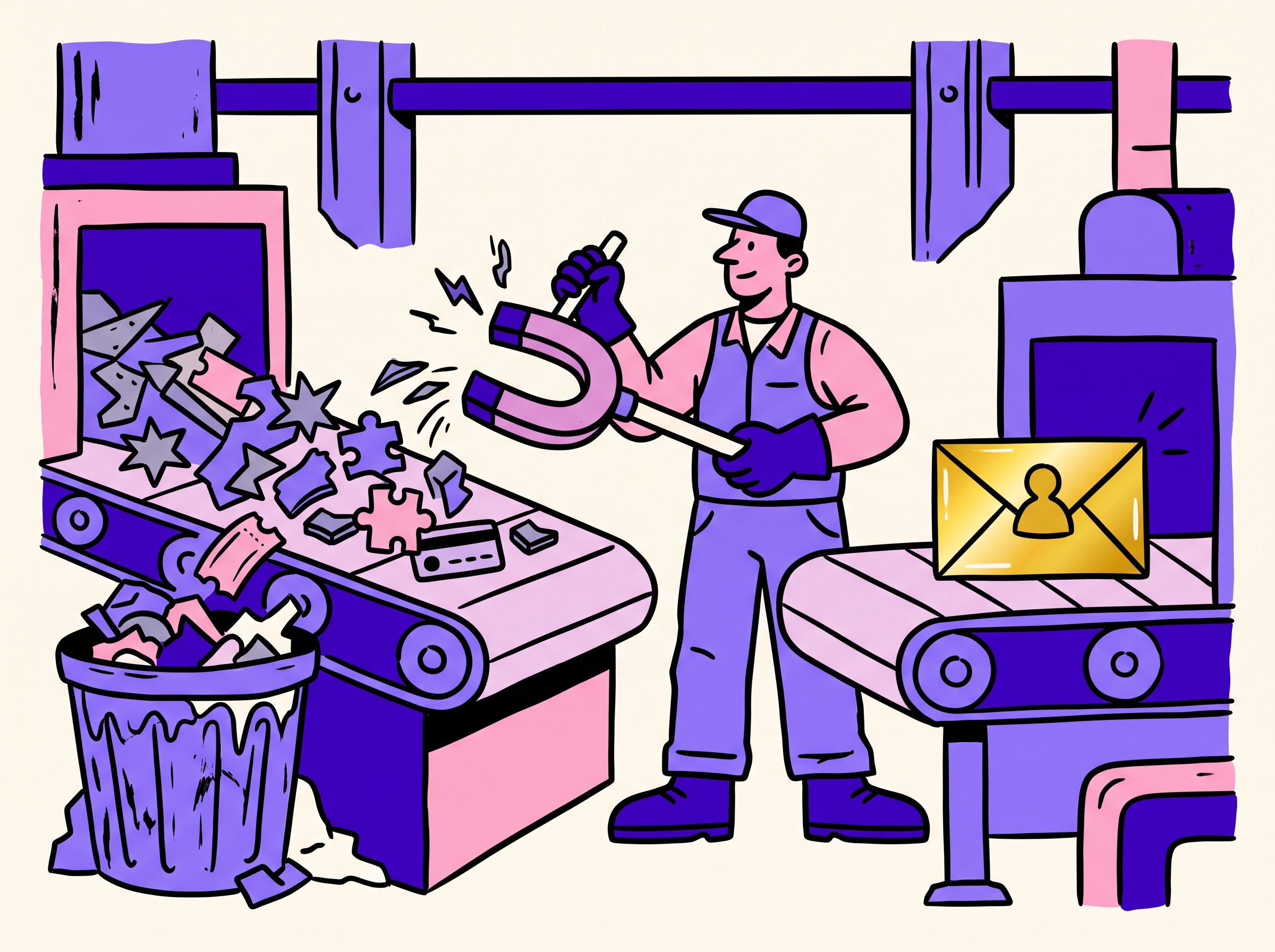
This is the scoring rubric the listicles never use.
| Thing you bought | What it actually is | Can you send it today? |
|---|---|---|
| Finder credit / search | One attempt to resolve an address. Misses often still bill. | No |
| Clay / waterfall lookup | One provider call in a chain. A null still spent the credit on many stacks. | No |
| Apollo / ZoomInfo export | A stored row: name, title, company, maybe an email | Not until you qualify and verify |
| "Verified" finder result | An address the vendor's checker liked | Not until you would send it |
| Lead (Ken definition) | One contact that is qualified and has a valid email | Yes. That is the unit. |
Ken's pricing page is explicit: load 10,000 profiles, qualify down to roughly 3,000, and maybe 1,000 valid emails, and you were billed for 1,000 leads. The 9,000 rows that died in the funnel are not leads. They are the cost of being honest.
A credit is an input. A lead is finished output. Mixing the two is how a $49/mo finder plan "covers 2,000 searches" and still cannot fill a 200-person sequence you would put your domain behind.
Hunter's own meter makes the gap visible. On hunter.io/pricing (checked September 2026): find = 1 credit, verify = 0.5 credit. Starter is $49/mo ($34 billed yearly) for 2,000 credits. Those numbers tell you how many lookups you bought, not how many people you should email.
Apollo hides the finder inside a seat-plus-credit sales-engagement bill. The live Apollo pricing page does not publish a simple dollars-per-email figure, which is the point. If you cannot say what a sendable contact cost, you are not buying leads.
Why do finders return so many invalid addresses?
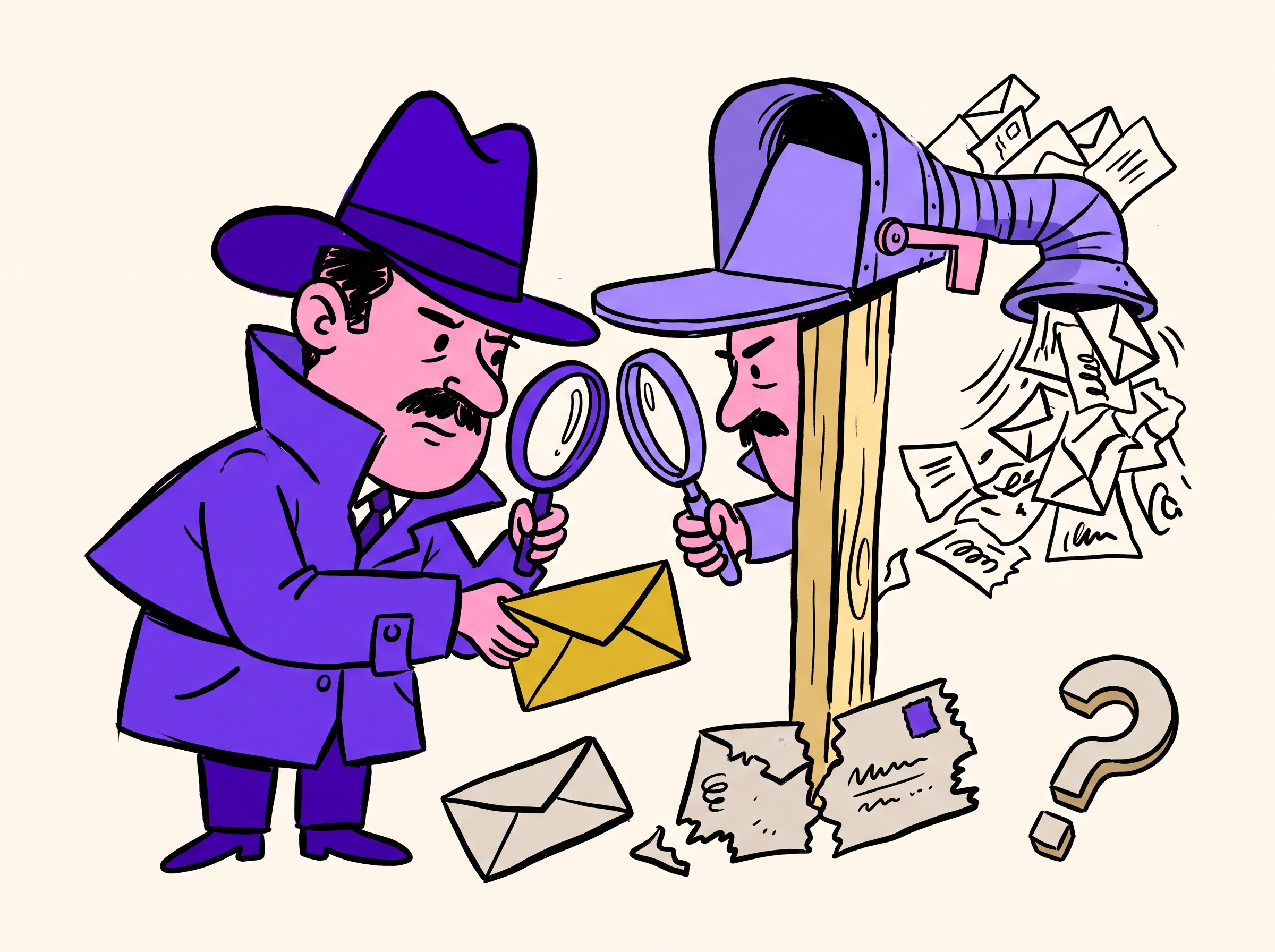
Four failure modes, none of them mysterious:
- The pattern was wrong.
jdoe@on a company that actually usesjane.doe@. SMTP may still say "maybe" on a catch-all. - The person left. The mailbox is gone or forwards into a black hole. The finder cached a hit from last year.
- The domain is catch-all. The server accepts every local-part, so the finder cannot prove a mailbox. That is not "valid." It is unresolved. We wrote the operator rule in catch-all email verification: park those rows; do not mix them into the primary send.
- The row was never a person you should email. Role boxes (
info@,sales@), students, agencies reselling your category, companies outside ICP. The finder did its job. Your list still should not ship.
This is why "accuracy" marketing is a trap. Vendors quote deliverability of the emails they returned, not coverage of your input list. A tool can be "95% accurate" on a 40% find rate and you still have a 60% hole plus whatever the verifier marked risky. We do not publish a Ken match-rate here because it moves by industry and by how hard you qualify. The shape does not: most raw rows die before send. The longer version of that funnel lives in why your cold email list is smaller than you think.
If bounce is the symptom, that is a list problem. See cold email bounce rate and how to get verified B2B email leads. This page stops earlier: do not call the finder CSV the asset.
What is the best B2B email finder in 2026?
There is no best finder. There is a best job for a finder, and a different product if the job is "give me people I can send."
| If your job is… | A finder is… | Better move |
|---|---|---|
| Resolve an address for a name you already chose | The right tool (Hunter-style domain → role is the classic) | Pair it with an independent verifier. Do not trust the in-tool badge alone. |
| Build the list of who to contact | The wrong tool | ICP + persona first, then find. How to build a cold-email lead list. |
| Replace Clay / Apollo as the whole motion | Still the wrong tool | Count the stack: data, verify, send, copy, replies. Clay alternatives and Apollo alternatives. |
| Get 10 sendable ICP contacts tomorrow without buying a meter | Not a finder | Ken Daily — 10 verified ICP leads each morning, free, no card. |
Hunter is a dedicated finder. Apollo is a database with a finder inside. Snov is a budget bundle. Clay is a waterfall of other people's finders, billed per call. None of them sell Ken's unit. If a roundup ranks credits or "charges for misses," it is scoring the meter. Score the rows you would put on a warmed domain.
Do I still need a finder if I use Clay or Apollo?
Usually you already have one. You are paying for it twice.
Apollo returns emails from its own graph. Clay will call Hunter, Dropcontact, Findymail, Prospeo, and whoever else you wired, often in sequence, often billing a credit when the cell comes back empty. A standalone Hunter seat on top of that is a third meter for the same local-part.
You still need a finder function. You do not need a finder product unless:
- You already have a tight named list (event attendees, inbound that never left an email, a CRM with names and dead addresses) and you only want resolution.
- One provider in the waterfall is blind on your niche and a specialist fills the hole.
- You are debugging a single account, not building a campaign.
If the workflow is "export 5,000 titles from Sales Nav, enrich, pray," a finder will not save you. The miss is upstream: no ICP, no "who we will not send to," no verifier with catch-alls quarantined. Adding Hunter to that pile buys more guesses.
How do you turn finder output into a sendable list?
Treat the CSV as raw ore.
- Start from ICP, not from the finder. Company, then person, then address. Reverse that order and you will personalize junk.
- Drop anyone you cannot defend. If you cannot write one line for why this person, this week, they are not a lead. A title match is not a reason.
- Verify independently. The finder's badge is one vendor's opinion. Only Safe/valid hits the primary campaign. Risky and catch-all stay out unless you have a spare-inbox test pool.
- Count finished rows, not credits spent. If 2,000 searches produced 180 sendable contacts, your unit cost is 2,000 / 180, not $49 / 2,000. Put that number next to your sequencer bill before you renew the finder.
- Do not send the residue. Pattern-guesses, catch-alls, and "unknown" are how domains that were healthy on Monday are throttled by Friday.
Ken collapses those steps: 300M+ profiles, qualification, then triple verification including catch-alls. You can run that in the app. Most teams do not want another waterfall, which is why Core is done-for-you at $597/mo with 5,000 finished leads included — not 5,000 credits.
If you just want to see the unit before you buy anything, Ken Daily drops ten of them in your inbox every morning. Free, no card, forever. That is the contrast with a 50-credit free tier: you are not practicing lookups. You are looking at sendable people.
FAQ
Is Hunter.io a B2B email finder or a lead database?
Hunter is a finder (domain search, name-to-email, verifier) with a Discover database bolted on. It is good at resolving an address once you know the person. It is not a substitute for ICP work, and its credits are lookups.
Why is my email finder accuracy high but my bounce rate still ugly?
The vendor measured the emails it returned. Your bounce rate measures everything you sent, including catch-alls you treated as valid, stale rows, and role addresses. Quarantine anything that is not independently confirmed.
Does Clay replace an email finder?
Clay orchestrates finders. You still pay the underlying providers, and you still have to qualify and verify. Clay without a "would I send this?" gate is a more expensive CSV.
How many finder credits equal 1,000 sendable leads?
There is no honest conversion. It depends on niche, title quality, catch-all density, and how hard you qualify. Ken's public example runs the other direction: 10,000 profiles in, 1,000 leads out. Build 5–10x the campaign size in raw rows or you will ship a thin, noisy list.
Can I use a free email finder for cold outreach?
Free tiers (Hunter's 50 credits, similar trial packs elsewhere) are fine for testing whether a domain pattern resolves. They are not a campaign. Ten verified ICP contacts from Ken Daily will teach you more about list quality than 50 unscoped lookups.
Should I buy a finder if I already pay for Instantly or Smartlead?
Only if you lack a resolution step. Sequencers do not invent good addresses. You still need data, verification, and someone who will kill bad rows.