
Cold Email Bounce Rate Is a List Metric Wearing a Deliverability Costume
A good cold email bounce rate is under 2%. Hard bounces are a list-quality verdict, not a warmup problem. Split hard vs soft, then fix the file.

A good cold email bounce rate is under 2 percent, with under 1 percent the real operating target. That spike is almost never a warmup problem. Hard bounces (permanent 5xx failures) are a list-quality verdict. Soft bounces (temporary 4xx failures) are a different diagnosis. Verify, drop role-based and dead companies, and park catch-alls before you buy another domain.
The dashboard that lights up is usually a deliverability screen. The cause almost always lives one layer upstream: you emailed addresses that were never finished leads. A Ken lead is a qualified contact with a valid email — not a scraped row, not a credit, not a “risky” verifier label you decided to ship anyway.
What is a good bounce rate for cold email?
Treat under 2% as the action line and under 1% as the healthy band for a verified B2B list. That is the same hygiene floor we publish in the cold email benchmarks post. It is operator practice, not a number Google prints next to its spam-complaint rule.
Read the bands as a stop-and-fix chart, not as a personality test for your copy:
| Combined bounce rate | How to read it | What to do |
|---|---|---|
| Under 1% | Clean, recently verified list | Keep sending. Do not “improve” a number that is already a floor. |
| 1–2% | Acceptable for cold, some decay | Re-verify before the next batch. Check hard vs soft split. |
| 2–5% | Warning. Providers and sequencers start treating the list as dirty | Pause new volume. Suppress hard bounces. Do not buy warmup. |
| Over 5% | Danger. Looks like a scraped or stale file | Stop the campaign. Full re-verification. Resume only on confirmed-valid rows. |
A 3% rate that is all mailbox-full soft bounces is a different emergency from a 3% rate that is all “user unknown” hard bounces. Combined bounce rate without the split is how teams buy the wrong fix.
Public roundups that float a ~5% “industry average” are describing dirty files, not a target. Do not aim at an average built from people who skipped verification.
What is the difference between a hard bounce and a soft bounce?
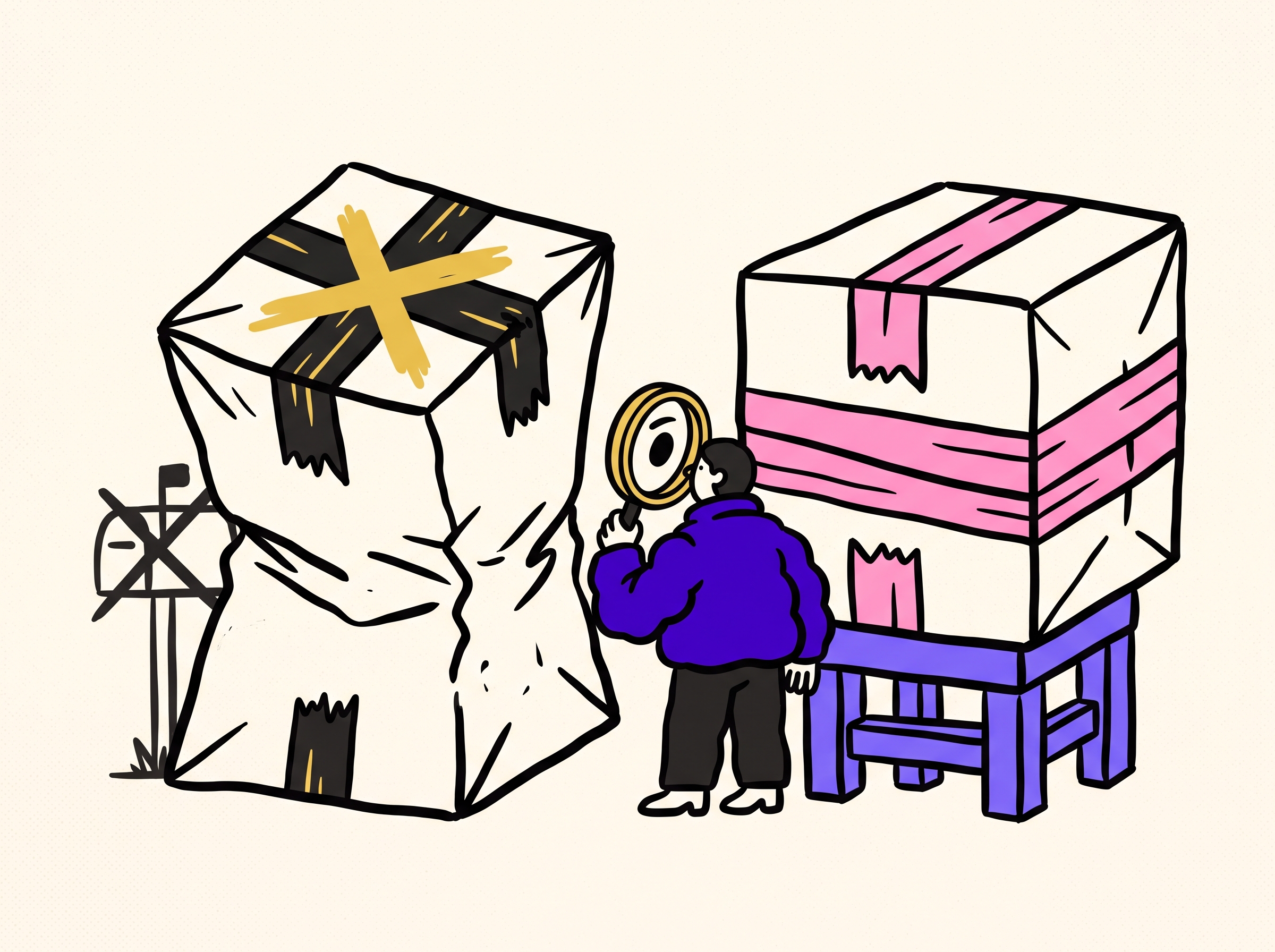
A hard bounce is a permanent failure. The receiving server returns a 5xx code: mailbox does not exist, domain does not exist, or the recipient is rejected for good. Gmail documents these as permanent SMTP failures in its error-code list. Suppress the address immediately. Never retry it from this domain or any other domain you care about.
A soft bounce is a temporary failure. The server returns a 4xx code: mailbox full, greylisting, rate-limit, temporary outage, message too large. The mail might deliver on a retry. One soft bounce is not a dead address. A pattern of them can be.
| Hard bounce | Soft bounce | |
|---|---|---|
| SMTP class | 5xx — permanent | 4xx — temporary |
| Typical cause | No mailbox, dead domain, explicit reject | Full mailbox, greylist, throttle, brief outage |
| Reputation read | “This sender does not know the audience” | Mixed: often innocent, sometimes a deferral that is already reputation |
| First action | Suppress now. Never retry. | Retry a few times. Watch the address across sends. |
| Remove from list? | Yes, immediately | Only after repeated failures, or if the same address never clears |
| What it is not | A warmup problem | Proof the person left the company |
Two traps sit in the middle.
Delayed bounce. Some servers accept at SMTP and reject later — common on catch-all / accept-all domains. If you only watch the send window, you undercount. Check again the next morning.
Soft bounce that is actually a throttle. A flood of 4xx deferrals from Gmail or Microsoft after you spike volume is not a list problem. Gmail’s sender guidelines tell you to cut volume when messages start bouncing or deferring, then ramp again. That is infrastructure and pacing. It is the exception, not the default story when bounce rate jumps the day you uploaded a new CSV.
Does a high bounce rate hurt sender reputation?
Yes — especially hard bounces — but not the way the folklore slide says.
Mailbox providers do not publish a bounce-rate twin of the spam-complaint ceiling. Gmail’s bulk-sender rules name authentication, a spam rate under 0.3% in Postmaster Tools (aim under 0.1%), one-click unsubscribe, TLS, and valid DNS. Bounce rate is not on that list. Yahoo’s sender best practices do tell you to monitor hard and soft bounces and remove invalid recipients promptly. Sequencers and ESPs commonly flag or pause around 2%. That is why 2% became the street number.
The mechanism is still real. A burst of “this mailbox does not exist” is the fingerprint of a sender working a bought, scraped, or rotten file. Providers then throttle, defer, or spam-folder the next campaign to addresses that were fine. You do not feel the bounce. You feel inbox placement collapsing on mail that should have landed.
That is why bounce rate belongs next to complaint rate and placement on the KPI sheet, not next to subject-line tests. It is a hygiene metric that leaks into reputation. It is not a copy metric wearing a deliverability costume — and warmup will not costume it back.
How do you lower bounce rate without buying a new domain?
Fix the file. A new domain on a dirty list inherits the same 5xx codes.
Work this order. Stop at the first step that brings hard bounces back under 2%. Do not skip to infrastructure.
1. Split hard vs soft in the report. If you cannot see the split, you cannot pick a fix. Most sequencers already store both. Export them.
2. Suppress every hard bounce, forever. One send to a dead mailbox is a mistake. A second send is a habit providers notice.
3. Re-verify the unsent remainder. Syntax, MX, mailbox check, catch-all flag, role-based, disposable. The pipeline is in how to get verified B2B email leads. Dedicated verifiers beat the cheap syntax pass built into many sequencers. Re-check anything that sat 30–60 days. B2B contacts change jobs; last quarter’s “valid” is this quarter’s 550.
4. Drop role-based addresses. info@, sales@, support@, admin@ often accept mail and almost never produce a personal reply. They also get filtered harder. They are not a clever enterprise contact. They are a skip.
5. Park catch-alls. Unknown / risky / accept-all is not valid. Mix them into the primary send and delayed bounces show up after you thought the list was clean. The treat-as rule lives on the catch-all verification page: confirmed-valid on the primary campaign, unresolved rows in their own pool.
6. Kill dead companies, not just dead inboxes. Acquired, shut down, parked domains, and “we pivoted and the site 404s” produce hard bounces that look like a data vendor problem. They are an ICP problem. Your raw match list is already smaller than it looks once finding, verification, and qualification have run. Bounce rate is what happens when you skip a gate and let Gmail run it for you.
7. Only then look at sending identity. If hard bounces are already under 1% and you are still seeing a wall of 4xx deferrals, that is pacing, authentication, or a domain that was never warmed — covered in the deliverability guide and private vs pooled warmup. Buying a third sending domain while the CSV still contains [email protected] is theater.
If you would rather not run that funnel yourself, Ken Daily drops 10 verified ICP leads every morning, free, no card. The bounce-rate work happens before the row reaches you.
Should you remove soft bounces from the list?
Not on the first failure.
Remove a soft-bounced address when it fails repeatedly across retries or across campaigns and never delivers. Treat three to five consecutive soft failures as a practical hard bounce. Persistent 4xx on the same mailbox is often a full, abandoned, or greylisting-forever box. Keeping it in the sequence spends capacity and inflates combined bounce rate.
Do not mass-delete every 4xx after one send. Greylisting is supposed to reject the first attempt from an unknown sender. A mailbox that was over quota on Tuesday may accept on Thursday. If you purge the whole soft-bounce column, you delete real people to flatten a chart.
Watch the shape:
- One address, repeated 4xx → suppress.
- Many addresses, same provider, same hour, 4xx with rate-limit language → cut volume, do not delete the list.
- Soft bounces that later become 5xx → they were delayed hard bounces. Suppress as hard.
Is 2% bounce rate a real threshold or folklore?
Both. Use it anyway.
It is folklore in the sense that Gmail does not publish “keep bounce rate under 2%” the way it publishes “keep spam rate below 0.3%.” Anyone who says “Google’s 2% bounce rule” is mixing two different documents.
It is real in the sense that hard bounces are still a list-quality signal, sequencers commonly pause around 2%, and waiting until 5% means the next campaign to good addresses is already paying for the last one. Ken’s published floor is the same number: under 2%, ideally under 1%. That is hygiene, not a Ken performance claim.
Acting at 2% is cheaper than arguing about whether 4.9% is still “fine.”
Frequently asked questions
What is a good bounce rate for cold email?
Under 2%, with under 1% the target on a verified B2B list. Combined rate above 5% is a stop. Always split hard vs soft before you decide what “good” meant this week.
What is the difference between a hard bounce and a soft bounce?
Hard = permanent (5xx, mailbox or domain gone) — suppress now. Soft = temporary (4xx, full mailbox, greylist, throttle) — retry, then suppress if it never clears. Hard bounces are the ones that teach providers you do not know your audience.
Does a high bounce rate hurt sender reputation?
Hard bounces do. They mark you as a sender on a bad file, and the penalty shows up as worse placement on mail that should have been fine. Gmail’s printed bulk-sender ceiling is the spam-complaint rate, not bounce rate. Yahoo still tells you to pull invalid recipients promptly. Do not wait for a statute.
How do you lower bounce rate without buying a new domain?
Suppress hard bounces, re-verify, drop role-based addresses, park catch-alls, and remove dead companies. A new domain on the same CSV will bounce the same way. Infrastructure is step seven, not step one.
Should you remove soft bounces from the list?
Not after one 4xx. Remove them after repeated failures, or when a later bounce turns into a 5xx. Mass-deleting greylisted first attempts is how you shrink a good list for no reason.
Is 2% a real threshold or folklore?
It is operator consensus plus common sequencer/ESP flags, not a Gmail-published bounce statute. Use it as the pause line. Folklore is waiting until 5% because a roundup called 5% “average.”
The short version
Bounce rate is a list metric that happens to render on a deliverability dashboard. Hard bounces mean the address was never a lead. Soft bounces mean wait, then decide. Stay under 2%, aim under 1%, and do not buy warmup — or a new domain — until the file is actually finished.
If you want the finished file without running the funnel, start with Ken Daily. Ten verified ICP leads a morning, free, no card. The bounce chart stays boring on purpose.