
Cold Email A/B Testing: Stop Testing Subject Lines and Calling It Science
A/B test cold email on replies, not opens. One variable, a sample that survives four replies moving, offer and first line before the subject.
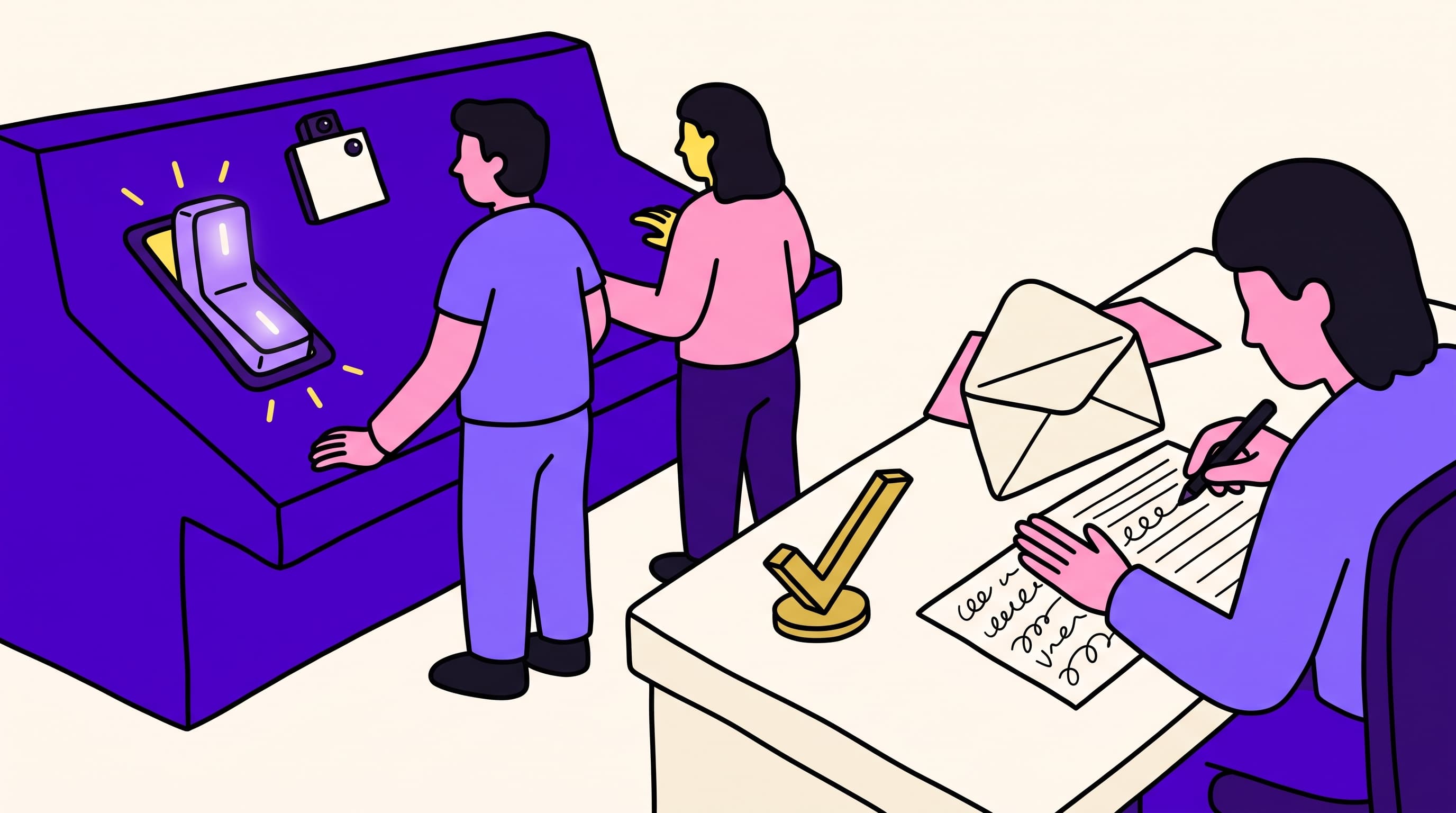
A/B testing cold email is one controlled change, sent to enough contacts that a handful of replies cannot flip the result, judged on human replies and positive replies, not the tracking pixel. Most sequencer tests fail that bar. They score a number Ken already turned off, on a sample too small to mean anything.
The A/B button in Instantly, Smartlead, Lemlist, and every cousin is huge because open rate is easy to chart. Apple Mail Privacy Protection, Gmail image proxies, and security scanners load that pixel without a human. We do not optimize cold sends against it. The implication is not "never test." It is: test the offer and the first line first, one variable, and only call a winner when the list is large enough that moving four replies does not change the story.
How do you A/B test cold email?
Write the hypothesis before you send. "Variant B asks for a teardown instead of a 15-minute call, same ICP, same mailboxes, same week. We will read positive replies after both arms finish the same sequence window." If you cannot say that in one sentence, you do not have a test. You have two campaigns sharing a dashboard.
Hold everything else still:
- Same ICP and exclusions. Mixing 20-person SaaS with 500-person enterprise is an audience test wearing copy clothes.
- Same sending pool and schedule. Interleave A and B. Do not dump A on Monday and B on Thursday.
- One change. Subject or first line or offer or CTA. Not a new angle plus a new ask plus a new segment.
- A pre-committed sample. Decide the volume, then look once. Peeking until the chart looks friendly is how fake winners ship.
That is the whole method. The rest of this page is what to spend that method on, and when to skip it.
Should you A/B test subject lines?
Usually later, and never against open rate.
A subject line only has to earn a glance. After Mail Privacy Protection, that glance is not what your pixel reports. Ken's operating rule is pixel off on the cold send, on only inside a real reply thread. So a "subject-line test" scored on opens is scoring prefetch and scanners. Even if you ignore the pixel, realistic subject-line effects on reply rate are small: tenths of a point, not multiples. Detecting tenths of a point at a ~3% baseline takes a list most teams will never fund.
Write a short, specific subject the way a person would. Ship it. Spend the statistical budget on the offer and the first line, which actually change whether someone answers.
The exception: you already have a working offer and a tight list, and you want to pair two hooks (subject plus the first 15 words as one unit). Judge that pair on replies, not opens. A subject that "wins opens" and loses replies did not win.
What should you test first: offer, first line, or CTA?
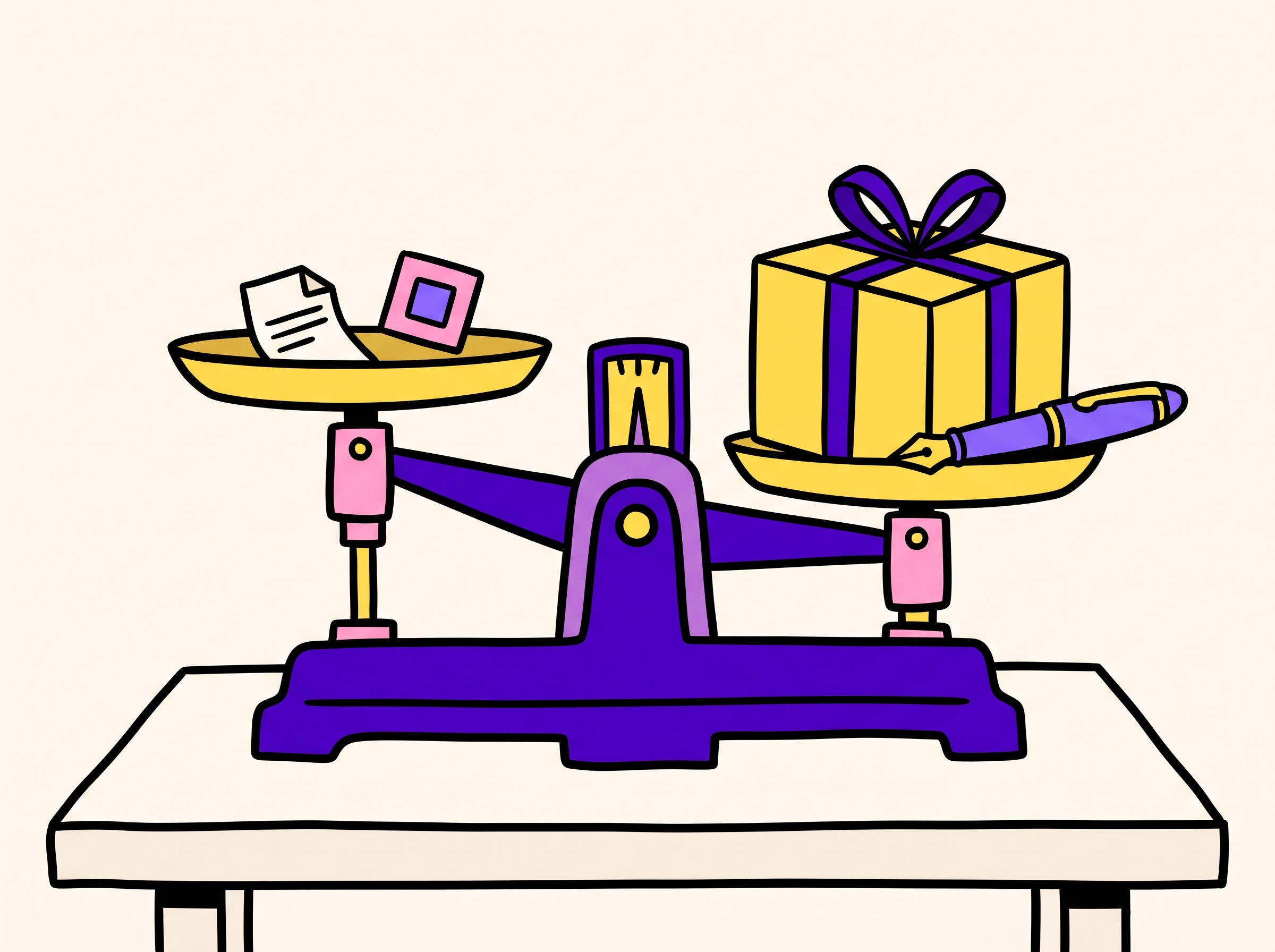
Test in descending order of effect size. Sequencer UIs invert this list because the smallest lever is the easiest button.
| Variable | Why it moves replies | What "success" looks like | When to skip |
|---|---|---|---|
| Segment / ICP cut | Targeting swings rates by multiples, not tenths of a point | Positive reply rate up on the same offer | You already have one tight list. Do not mix this with a copy test. |
| Offer / ask | A teardown, a specific outcome, or a smaller ask beats a prettier paragraph | More interested replies, not more "not interested" | You have not defined the offer yet. Write it first. |
| First line | Proves this is not a blast. Situation-specific vs category-generic | Reply rate up with the same ask | The line is merge-field theater (Hi {{FirstName}}). That is not a first-line test. |
| CTA | Direct meeting vs interest-check vs asset. Changes who answers and what they say | Positive share of replies holds or rises | You are swapping "quick chat" for "brief call." That is vocabulary, not a CTA. |
| Sequence length / spacing | A large share of replies arrive on later touches | More unique contacts reply across the sequence | You are still failing email one. Fix the first send. |
| Subject line | Small effect on replies; noisy if you still look at opens | Reply rate, same body | Your list cannot fund a small-effect test. Pick a human subject and move on. |
Ken's book-level reference, from the reply-rate and benchmarks posts: about 3% total replies per unique contact, with about 30% of those replies positive. That is volume with a full stack, not a promise for your niche on day one. Use it as the baseline you are trying to move, not a trophy.
If total replies sit under ~1%, do not A/B the subject. That band usually means list, inbox placement, or offer. Copy punctuation will not rescue it. Fix verification, placement, and who you mailed. Then test.
How many contacts do you need for a valid test?
Enough that four replies moving sides does not flip the winner. That is a heuristic, not a Ken sample-size formula. We are not publishing a proprietary calculator. The arithmetic is public two-proportion math, and every vendor page disagrees on the floor because they pick different lifts and confidence levels.
Worked intuition at a ~3% reply rate (Ken's book-level total, unique contacts):
- 200 sends per variant: about six replies each. A 4 vs 8 split looks like a "2x." Move four replies and it disappears.
- ~1,000 sends per variant: about 30 replies each. Still weak for a 3% vs 4% comparison. Fine for spotting a large, obvious swing (offer A vs offer B that actually feels different).
- Detecting a small lift (3% to 4%) at textbook 95% confidence / 80% power takes thousands per arm. Most outbound programs never send that on one hypothesis. Do not pretend 250 sends got you there.
Labeled heuristic we actually use:
- Pre-commit a sample. Do not stop because Tuesday looked good.
- Prefer ~1,000 unique contacts per variant as a working floor when you care about reply rate. If you cannot fund that, test a bigger difference (new offer, new segment) or do not split at all.
- Count replies, not sends, as the real denominator. Aim for a pile of replies large enough that a handful cannot reverse the call. Thirty-plus replies per arm is a common public rule of thumb; treat it as a thumb, not a p-value.
- Read positive replies before you crown anything. A variant that farms "remove me" is not a winner.
- Wait out the sequence, not day three. Follow-ups carry a real share of replies. Closing the test on the first send biases you toward whoever got lucky early.
If the whole list is under ~1,000 contacts, you probably cannot run a clean split. Ship one version. Read the replies like a person. Change one large thing next cycle. Sequential learning beats a coin flip with a trophy.

Can you A/B test if you do not track opens?
Yes. That is the point.
Opens are not required to know whether copy worked. A human reply is. Positive replies and meetings are better still. You can run the entire testing program with open tracking off on cold mail, which is how we send, and you should, because the pixel costs inbox placement for a metric that is mostly fiction.
What you do need instead of the pixel:
- A definition of "reply" that excludes out-of-office and auto-responders. Sales.co's 2026 cut of 2M+ emails found 45.1% of "replies" were auto-replies. If your sequencer dumps those into the winner column, you are testing who has a vacation responder.
- A definition of "positive" written down before launch: interested, asked a question, took a next step. Not "any human typed."
- The same mailboxes on both arms. Infrastructure differences swamp copy.
- QA on the copy before the split. An A/B test is not a substitute for the write-and-QA gate. Do not burn 2,000 contacts discovering that variant B has a spam-costume first line. Fail that in review.
AI personalization does not change the testing math. It changes what is legal to call a "variable." If every prospect gets a different first line, you are not A/B testing first lines unless you hold the framework constant and vary one slot (proof vs observation, meeting ask vs teardown). Personalization that is just merge fields is not a testable hypothesis. It is a template.
When is an A/B test just burning list?
When the expected effect is smaller than the noise, or when you already know the answer and are using the split to feel scientific.
Burn cases we see constantly:
- N too small. Fifty or a hundred per arm at a 3% reply rate. You are paying list for a story.
- Open-rate subject tests. You are measuring Apple's prefetch. We already killed that metric on cold sends.
- Two variables at once. New segment and new offer. You cannot reuse the "win."
- Peeking. Stopping at 180 sends because B is "clearly ahead."
- Cosmetic copy. "Hi" vs "Hey." "Quick chat" vs "brief call." The true effect is near zero. You will never detect it honestly, and you will spend the contacts anyway.
- Broken baseline. Under ~1% replies, or a bounce problem, or a complaint climb. Test operations first. Copy tests on a dirty list teach the domain the wrong lesson.
- Wrong winner. More total replies, worse positive share. You trained the sequence to collect objections.
List is the scarce asset. Every contact you burn on a fake test is a contact you cannot mail the real offer. If you want a feel for what a finished, verified row looks like before you spend a campaign on it, Ken Daily drops ten of them each morning. Free, no card.
How Ken actually treats tests
We run done-for-you outbound (Core is $597/mo on ken.so/pricing; the app is there if you want to run the same motion yourself). The testing culture is not "the sequencer picked a subject." It is:
- Human writes the framework. AI fills the personalized slot. A second pass fails hype and false claims. A human still approves before anything sends. That is the 10%. The 90% (list, enrichment, warmup, placement) is not an A/B test.
- We do not score cold copy on opens.
- We would rather ship one honest offer to a tight list than split a small list into two underpowered arms.
- When we do split, it is offer or first-line framework, one variable, same infrastructure, read on positive replies after the sequence window.
If your tool's big button is "test subject lines," ignore the button. Write the email a person would answer. Then, if you have the volume, test the thing that would actually change the meeting count.
FAQ
How do you A/B test cold email without fooling yourself?
One variable, same ICP, same mailboxes, interleaved in the same week, sample size chosen before send, judged on positive replies after the sequence finishes. If moving four replies would change the winner, you are not done.
Should you A/B test cold email subject lines?
Not first, and not on open rate. Subject-line effects on replies are small. Open tracking on cold mail is noisy and costs placement. Pick a human subject; spend the list on offer and first line.
How many contacts do you need for a statistically significant cold email test?
It depends on baseline and the lift you care about. As a labeled heuristic: plan around ~1,000 unique contacts per variant to read reply rate, more for a 3% vs 4% comparison, and skip the split if the whole list cannot fund it. There is no Ken magic N. Four-reply-flip is the gut check.
What should you test first in a cold email split test?
Segment, then offer, then first line, then CTA, then sequence shape, then subject. That is effect-size order. Tool UIs test the last item first.
Can you A/B test cold email if you turned off open tracking?
Yes. Replies are the metric. Positive replies are the metric that pays. Opens are optional diagnostics, and a bad one on cold sends.
When should you not run an A/B test?
When the list is too small, the baseline is broken, the change is cosmetic, or you would have to change two things to "see a difference." Sequential learning (one version, then one large change) beats an underpowered split.
A sequencer A/B toggle is not science. Science, in this channel, is a hypothesis you could explain to a skeptical operator, a sample that survives four replies moving, and a winner that still looks like a winner when you count only the people who wanted a next step.