
Cold Email Spam Words in 2026 Are Folklore. Filters Score Patterns.
Spam trigger words in 2026 are folklore. Filters score list quality, complaints, auth, and identical cadence. A clean word list on a dirty list still dies.
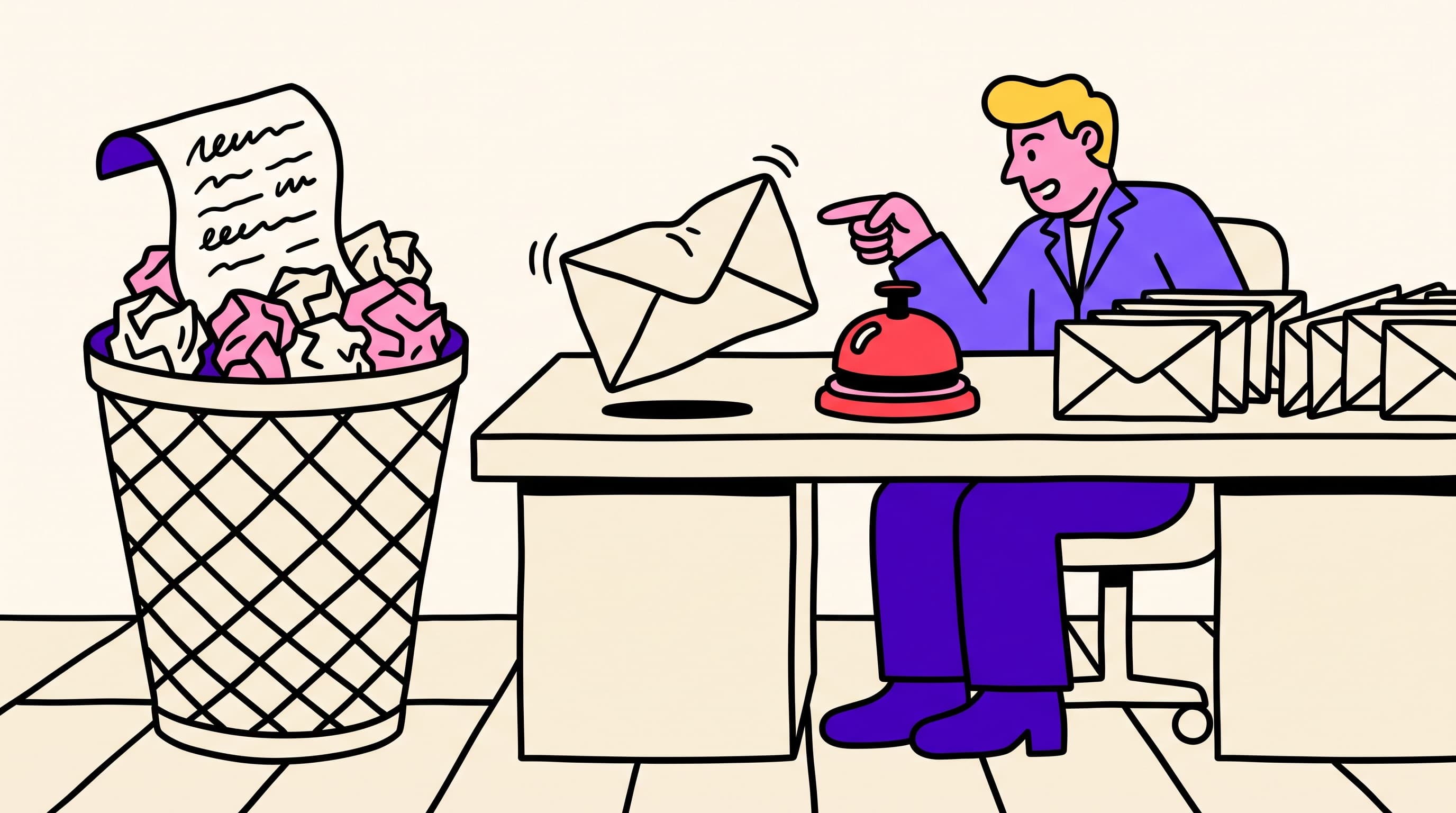
Spam trigger words in 2026 are folklore. Gmail and Yahoo score patterns: list quality, complaint rate, authentication, identical cadence, and tracking domains. Deleting "free" or "guarantee" from a subject on a dirty list still dies. Fix bounces, complaints, and send shape first. Then write like a person, not a coupon.
The internet still sells you a PDF of banned adjectives. Teams spend an afternoon swapping "free" for "complimentary" while the campaign is bouncing, sharing a tracking pixel, and cloning the same first line 4,000 times. Filters are not a dictionary. They are a reputation model with a content side-channel.
Do spam trigger words still matter in 2026?
A little. Not the way the listicles say.
Mailbox providers trained classifiers on twenty years of actual spam. Coupon language, ALL CAPS, fake urgency, and phishing phrasing still correlate with junk. That is why a subject that reads FREE!!! ACT NOW is a stupid thing to send even if your SPF is perfect.
It is not why your B2B sequence is in spam.
Modern filters (Gmail's classifier, Microsoft SmartScreen, Yahoo's bulk path) score the whole event. Google's sender guidelines do not publish a word list. They publish authentication, TLS, honest formatting, and a user-reported spam rate under 0.3% in Postmaster Tools, with 0.1% as the operating target. Yahoo's bulk-sender rules use the same 0.3% complaint ceiling. Neither document says "do not write guarantee."
If a single noun could sink you, those pages would say so. They do not.
What still hurts at the word layer is density and costume: stacking hype, fake-Re: subjects on a first touch, currency-in-the-subject theatrics, and copy that looks like an infomercial. One ordinary "free" inside a human sentence ("happy to send the teardown for free") is not a landmine. A subject built entirely of landmines is a costume.
What actually gets cold email sent to spam?
Five patterns do the work. Words are a sixth, and a weak one.
1. The list. Hard bounces tell the provider you do not know who you are mailing. That is a list metric wearing a deliverability costume, not a copy problem. Verify, suppress 5xx failures, park catch-alls, drop role-based inboxes. Do this before you touch a thesaurus.
2. Complaints. "Report spam" is a direct vote. Cross 0.3% and Google stops offering mitigation; stay closer to 0.1%. A spam-word checker will not save a list of people who never wanted the mail.
3. Authentication and sending shape. SPF, DKIM, DMARC, aligned From, TLS, matching forward/reverse DNS. Volume that jumps overnight from a cold domain. The full stack lives in the cold email deliverability guide. If this layer is broken, adjectives are a hobby.
4. Identical cadence. Five thousand near-identical bodies in a tight window fingerprint as a blast. Token-swapped first names do not break the fingerprint. Variation that a human would actually write does.
5. Marketing structure. Open pixels, rewritten click-tracking domains, three links in an 80-word note, HTML wrappers around a "personal" message, image-heavy layouts. We turned open tracking off on cold sends for this reason: you were buying a fake open rate with real inbox placement.
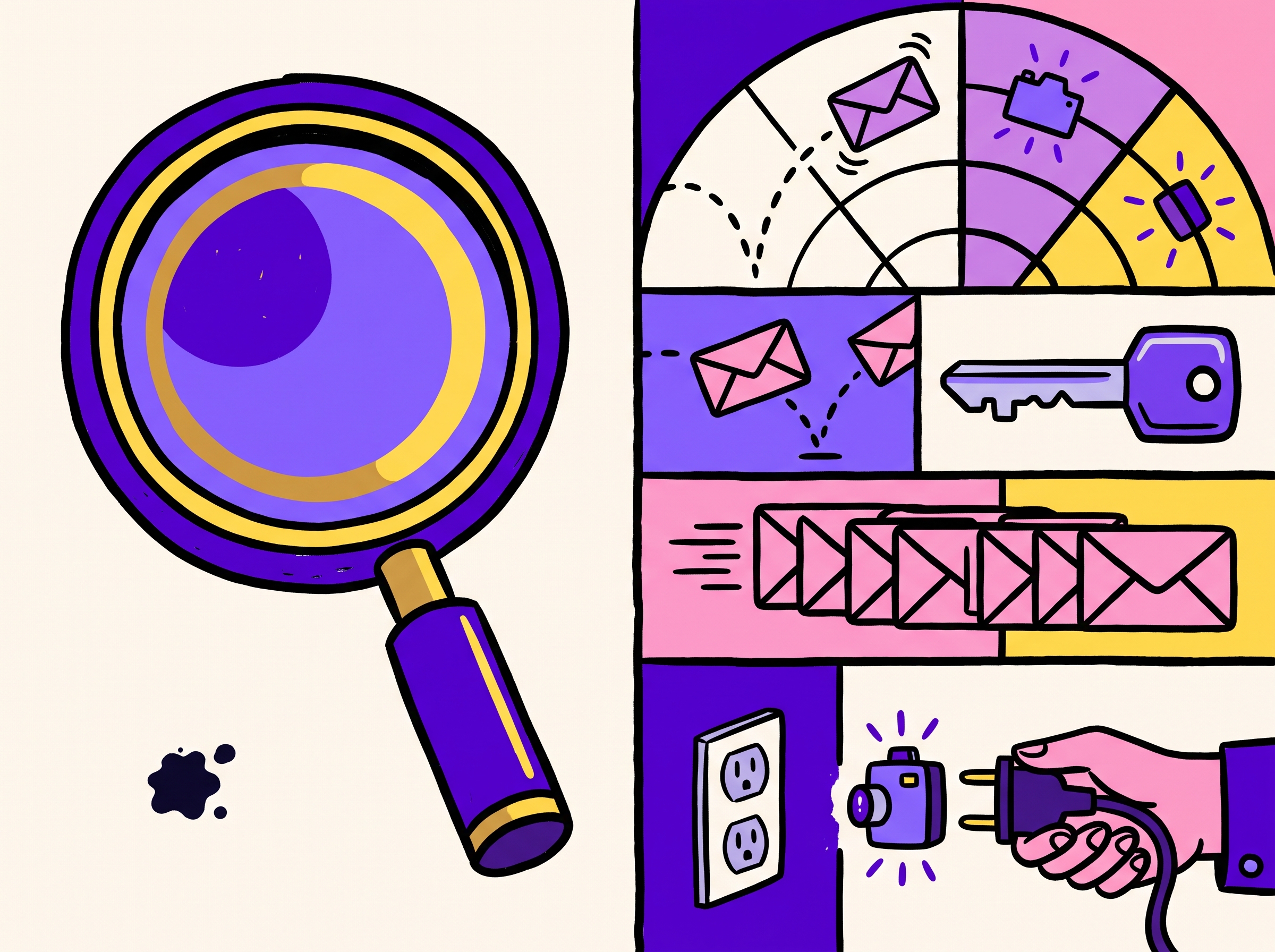
Words versus patterns: what to actually score
| Signal | What filters actually see | Word-list folklore | What to do |
|---|---|---|---|
| Hard bounces | "This sender does not know the audience" | "Maybe 'invoice' is banned" | Verify and suppress. Do not rewrite the subject. |
| Complaint rate | Direct user vote (keep under 0.3%; aim under 0.1%) | "If I delete 'free' they will not report me" | Better ICP, honest ask, working opt-out. |
| Authentication / new domain | Unsigned or misaligned mail from a cold domain | "The word 'offer' killed us" | Auth + warmup before volume. |
| Identical bodies at scale | Blast fingerprint | "Need a longer banned-word regex" | Real per-prospect variation, not {{FirstName}}. |
| Tracking pixel / link wrappers | Marketing automation costume | "The CTA verb is the problem" | Plain text, one link, pixel off on the cold send. |
Hype stack (FREE!!!, ACT NOW, fake Re:) | Looks like the spam the model was trained on | "Never say free, ever" | Write like a person. Skip the costume. One calm noun is fine. |
| "Quick question" / "just circling back" | Tired human pattern; tanks replies | "Gmail blocks this phrase" | It rarely "blocks." It bores. Rewrite the reason you are in the inbox. |
No row in that table is a ranked Ken conversion study. It is operator order: the things that show up in Postmaster and bounce logs before anyone reads your adjective.
Should you run copy through a spam-word checker?
You can. Do not let it be the review.
A checker is a regex with a marketing page. It will flag "free," "guarantee," "limited," "cash," and half the vocabulary of a real business conversation. Finance and insurance spam burned those tokens years ago. Your cold email to a VP of Ops is not a Nigerian-prince template, and treating it like one produces stilted copy that humans bounce off even when the filter does not.
Use a checker as a costume detector, not a dictionary:
- Flag ALL CAPS, stacked exclamation marks, fake
Re:/Fwd:on a first touch. - Flag three-plus links, shorteners, and a tracking domain on every href.
- Flag a subject that is only pressure ("last chance," "expires tonight") with nothing specific underneath.
If the only finding is that you used the word "free" once in a normal sentence, ship it. Spend the time on the QA that actually scales: a second pass that fails hype, false claims, and template texture. That process is in how to write and QA cold email at scale. The human still writes the line. The human still approves it. The checker does not get a veto.
Does "quick question" still hurt?
It hurts people. It is a weak filter story.
"Quick question" became a meme because every sequencer defaulted to it. Recipients learned the tell. Reply rates fall because the opener announces that you are running a sequence, not because Gmail maintains a quick question denylist.
Same bucket: "just circling back," "bumping this," "wanted to see if you had a chance." They are not spam words. They are empty. Empty mail gets deleted. Deleted-without-reading and "report spam" are engagement signals. Engagement is what the model actually weights.
Replace the ritual with a reason. One specific observation, one ask, one way out. If you cannot say why you are in the inbox without a cliché, you do not have an email yet. You have a slot in a tool.
How is this different from AI personalization getting flagged?
Different failure. Same inbox.
AI personalization getting flagged is about fingerprintable machine texture: the em dash, recency claims that age overnight, round marketing stats, hype the model reaches for when you ask it to "make it punchy." The fix there is two passes: write the specific line, then strip every machine tell.
This page is the layer underneath that. You can hand-write a clean, human sentence and still miss the inbox if the domain is cold, the list is dirty, the pixel is on, and 4,000 twins of that sentence left in the same hour. Word folklore is what teams do instead of looking at those patterns.
Do not merge the jobs. Costume (AI tells, infomercial stacking) is copy QA. Placement (bounces, complaints, auth, cadence, tracking) is operations. Swapping synonyms treats an ops problem as a vocabulary problem.
What should you fix before you edit adjectives?
Work this order. Stop when Postmaster and the bounce split look sane. Then, and only then, argue about words.
- Split hard vs soft bounces. Suppress every 5xx. Re-verify the rest. Park catch-alls.
- Read complaint rate in Postmaster, not in a sequencer vanity chart. If you are climbing toward 0.3%, the copy is not the first lever. The audience is.
- Auth and warmup. SPF + DKIM + DMARC aligned, TLS, PTR. New domains ramp. Do not debut a domain with a "cleaned-up" subject line on 200 untested inboxes.
- Kill the marketing costume. Pixel off on the cold send. One link, to a real domain. No shortener. Minimal HTML.
- Break the fingerprint. If twenty consecutive sends share a skeleton, you are blasting. Vary the actual sentence, not just the token.
- Then edit adjectives. Cut the infomercial stack. Leave ordinary business words alone. Write the line a person would send.
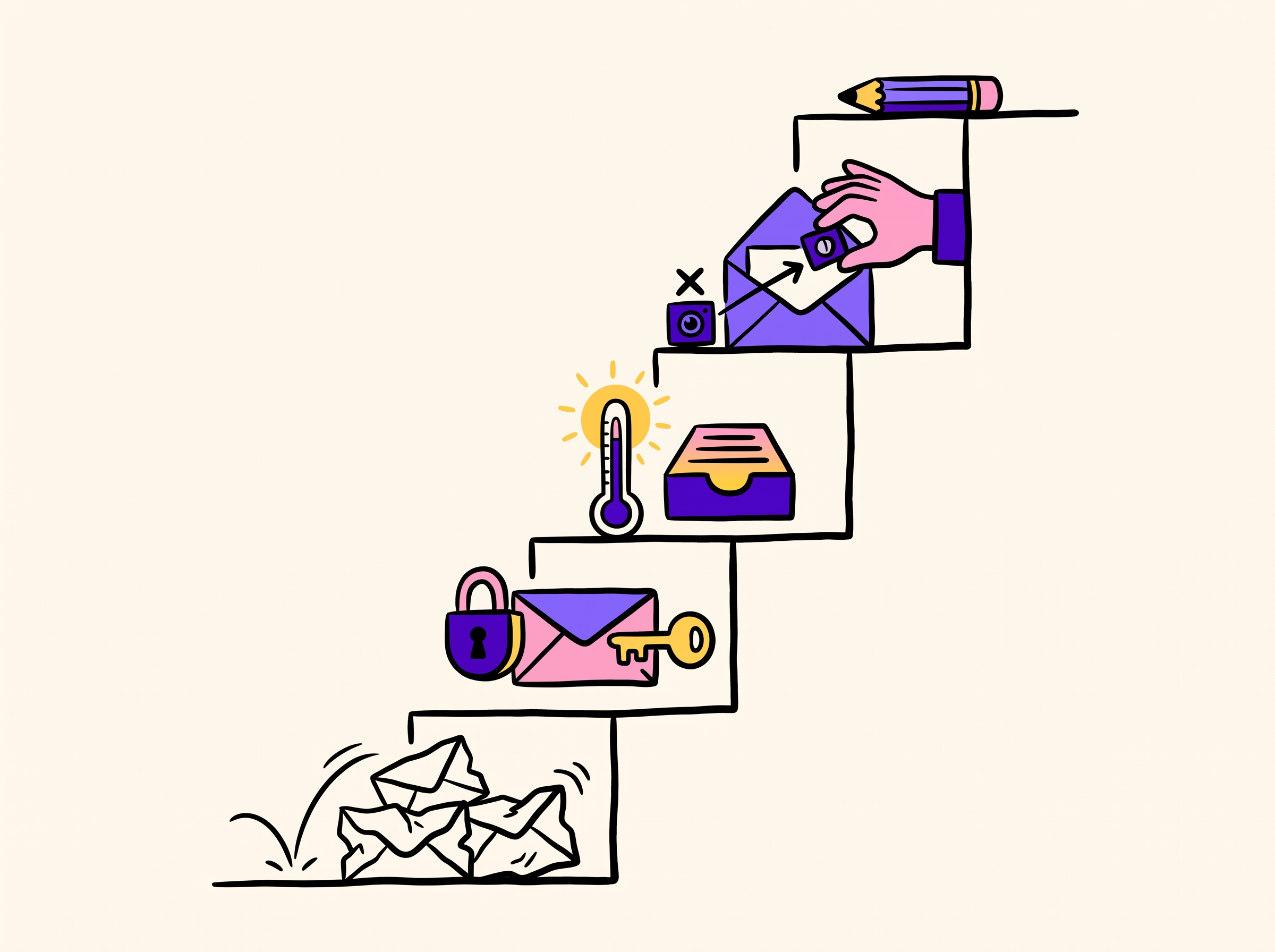
If you want a daily sample of what a finished, verified row looks like (not a credit, not a "risky" pass), Ken Daily sends ten of them each morning. Free, no card. Use it to feel the difference between a list you would actually send and a file a spam-word checker cannot save.
FAQ
Do spam trigger words still matter for Gmail in 2026?
As a side channel, yes. As the main gate, no. Gmail scores reputation, authentication, complaints, and engagement. Isolated words almost never decide a well-authenticated, low-complaint send. Stacked infomercial language on a cold domain can.
Will deleting "free" and "guarantee" from my subject fix spam folder placement?
Usually not. Those swaps are 2014 advice. If you are in spam, look at hard bounces, complaint rate, domain age, and whether every message carries a tracking domain. Then write a subject a human would open.
Is there an official Gmail spam-word list?
No. Google publishes sender requirements (auth, TLS, formatting, spam rate). It does not publish a dictionary of banned nouns. Third-party "500 words to avoid" posts are recycled marketing, not a spec.
Can a spam-word checker replace deliverability work?
No. A checker cannot see your bounce split or Postmaster complaint rate. Use it to catch costume (caps, fake Re:, link piles). Do not let it rewrite a normal sentence into something no buyer would answer.
Does "unsubscribe" in the footer send cold email to Promotions?
Formal marketing-footer language can classify the message as bulk. You still need a real way out. Google and Yahoo expect bulk senders to honor opt-out quickly. Write the opt-out like a person, not like a newsletter template.
What should I change first if my cold emails started landing in spam?
Stop sending. Split bounces. Check Postmaster spam rate. Confirm auth. Turn the open pixel off. Then look at whether you are blasting identical copy. Adjectives are last.
Filters got better at spotting patterns, not synonyms. A clean word list on a dirty list still dies. Fix the list, the complaints, and the send shape. The sentence can be ordinary. Ordinary is the point.