
How to Handle Cold Email Replies (The Campaign Is Not Over at Send)
Classify replies on arrival. Humans answer positives the same day. Software closes OOO and unsubscribes. The campaign is not over at send.
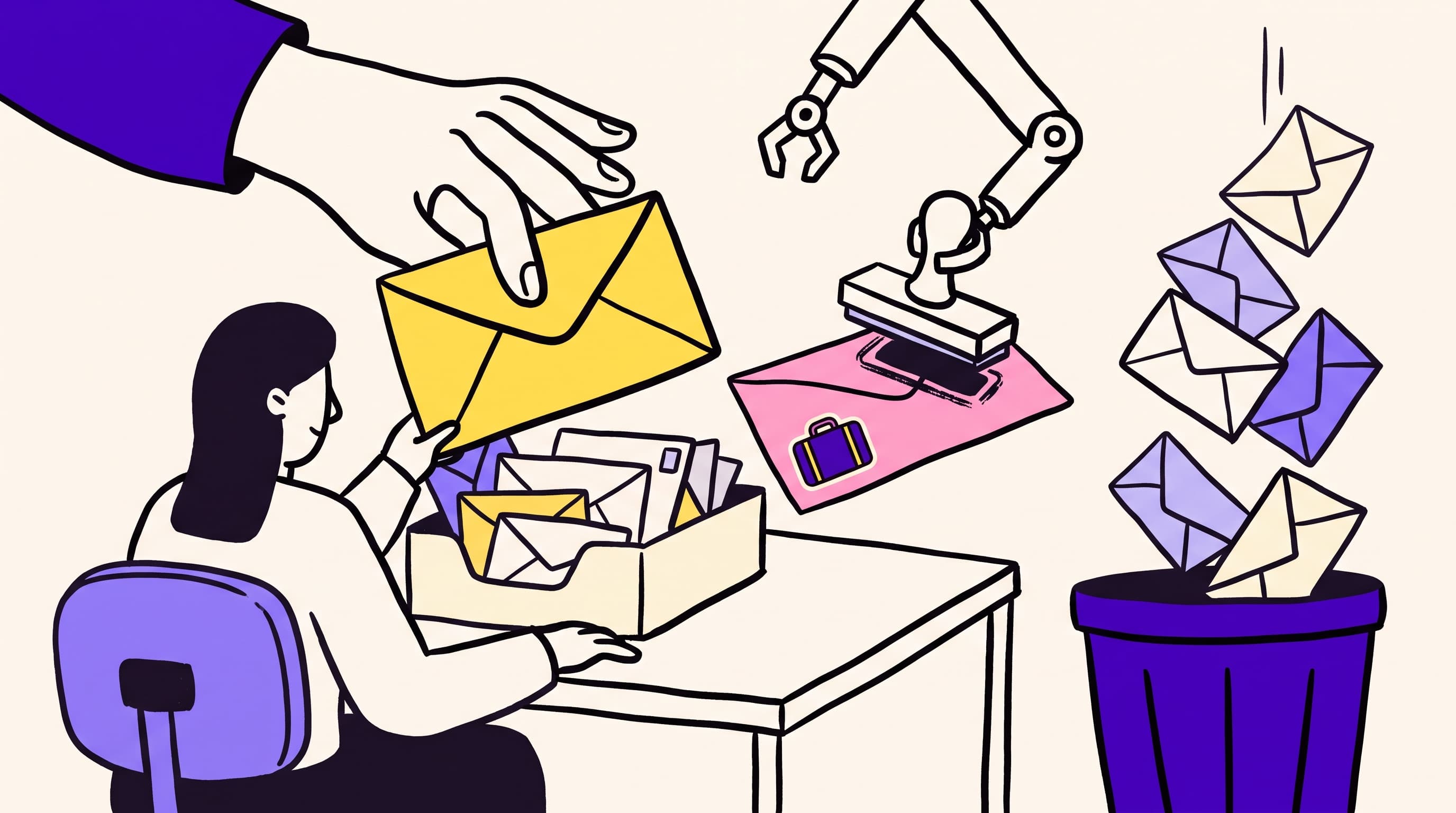
Handle cold email replies by classifying them the moment they land, then routing by action: a human answers positives the same day, software closes unsubscribe and out-of-office, and nobody treats auto-replies as pipeline. The send is not the product. The reply is. Most of the volume is mechanical. The conversation still needs a person.
Outbound writing usually stops at the send button. Teams argue about subject lines, then let a hand-raise sit in a unified inbox until Monday. Ken's book-level average is about 3% total reply rate, with about 30% of those replies positive. That is a thin slice. It is also the only slice that can become a meeting. Treat it like inventory that spoils.
This is inbound reply ops, not an AI-SDR pitch. A human still authors and approves the outbound. A human still owns the live conversation. Classification and routing are the 90% you should automate. The reply that says "this is interesting, send times" is the 10% you should not.
How should you handle cold email replies?
Build a queue, not a notification.
- Land every reply in one place. Sending domains scatter mail. If positives hide in mailbox #14, you do not have a system.
- Classify before anyone types. Interested, question, not now, referral, not interested, unsubscribe, out-of-office, bounce. Sentiment (positive / negative) is too coarse. An OOO can look "positive." A sarcastic "sure" can look interested.
- Stop the sequence on any human reply. A "not interested" that still gets touch three is how you mint a spam complaint.
- Route by action, not by who happened to check Slack. Each label has an owner and a next step. Ambiguous labels are how warm leads sit.
- Log the type and the outcome in the CRM. If the next rep cannot see that this person already talked, you will cold-email them again.
Sales.co's 2026 cut of 2M+ emails found 45.1% of "replies" were auto-replies. If you count those as conversations, your reply rate is a vanity number and your reps spend the afternoon talking to vacation messages.
What counts as a positive reply?
A positive reply is a human who left the door open. Not a meeting booked. Not a calendar click. The earlier signal.
Treat as positive:
- "Send a link" / "what does this cost" / "this week is open"
- A specific question about the offer (that is evaluation, not a no)
- "Not me — talk to Priya" (a referral is warmer than your original send)
- "Q3" with a real constraint (timing, not fit)
Do not treat as positive:
- Out-of-office, ticket acks, "thanks, I received this"
- "Remove me" dressed in politeness
- "Looks interesting" from a mailbox bot, or a one-word "ok" with no context — park it for a human glance, do not auto-book
Positive share of replies is the number that predicts meetings. Ken tracks it at about 30% of human replies, which implies roughly 0.9% of unique contacts. Industry write-ups often print a lower interested share when auto-replies pollute the total, or when "positive" is defined as meeting-booked only. Pick a definition and keep it.
How fast do you need to answer a positive?
Same business day. Same morning if you can. Do not let a positive sit over a weekend.
That is an operating instinct, not a Ken measured SLA. The oft-cited 2007 Lead Response Management study (InsideSales / MIT) found contacting a web lead inside the first hour made qualification several times more likely than waiting longer. Cold email is not an inbound form fill. The decay is still real: the person was at a keyboard, they typed, then they went back to their day.
What actually kills the meeting is not a 12-minute delay. It is Tuesday's "sounds interesting" sitting unread until Thursday because the founder was in sessions, or because the DFY partner's "master inbox" has no on-call.
Match length. If they wrote one line, do not answer with five. The job of the first human reply is almost never to sell. It is to book the next step with as little friction as possible. Specific times beat "whenever works." A calendar link is fine. A discovery interrogation before they have a slot is how you lose them between Tuesday and Thursday.
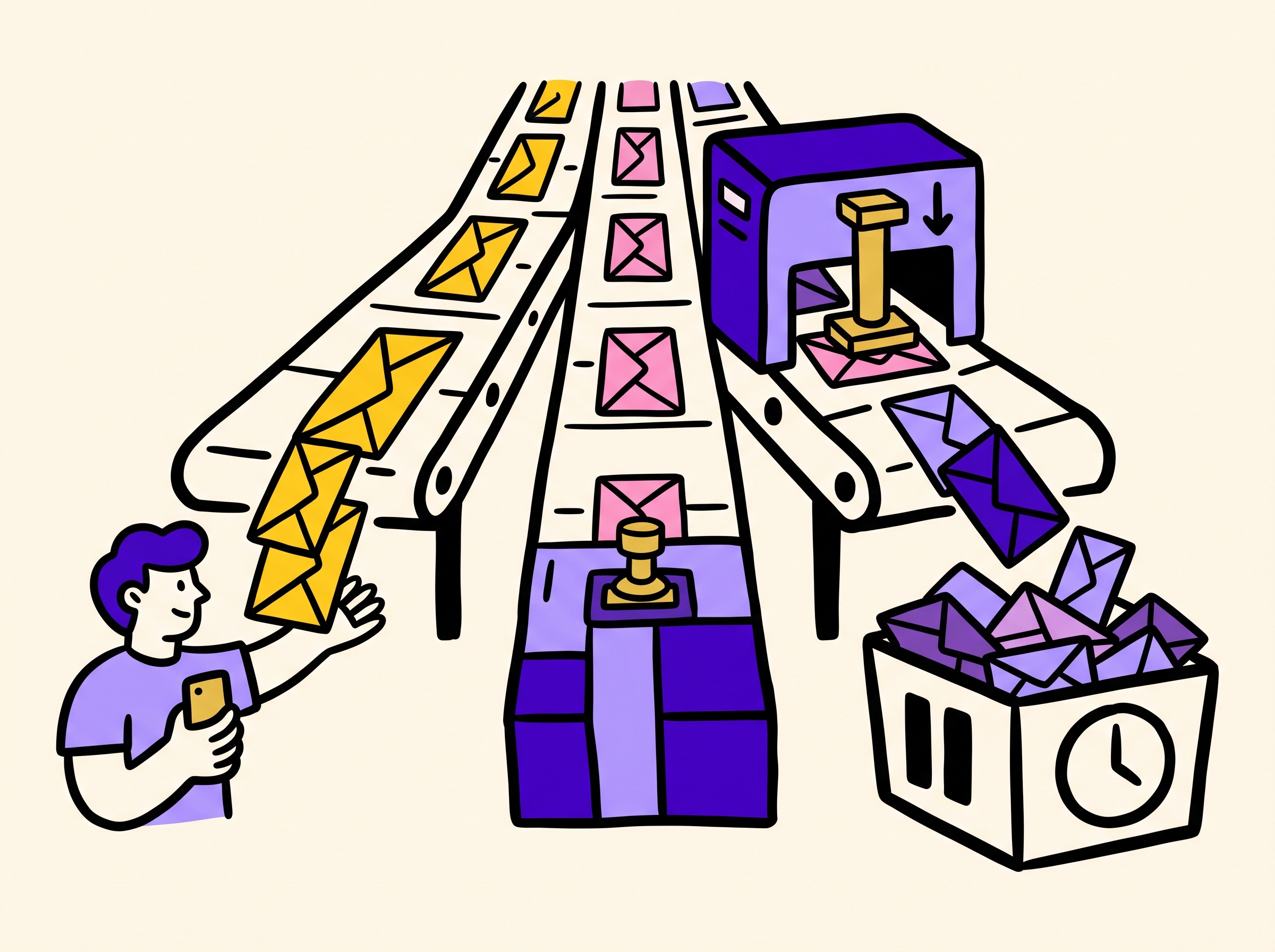
Which replies can software close, and which need a human?
Ken's reply agent is a public product claim that it auto-handles about 70% of replies — the obvious not-now, unsubscribe, and out-of-office slice. Phrase that as a claim, not an SLA, and not as "the AI books the meeting unsupervised." The remaining ~30% is why a person still owns the conversation.
| Reply type | Who owns it | SLA instinct | Do not |
|---|---|---|---|
| Interested / "send times" | Human, same owner who would take the call | Same business day; do not leave it over a weekend | Auto-send a generic calendar dump and a pitch restatement |
| Question / objection | Human (draft assist is fine) | Same day | Argue. Answer the actual question in two sentences, then propose a step |
| Referral ("talk to X") | Human | Same day | Ignore the named person. Ask for an intro or permission, then open with the colleague's name |
| Not now | Software can date-stamp; human confirms the date if it is fuzzy | Same day to acknowledge | Drop them back into the cold sequence next month with no memory |
| Not interested | Software can close the loop; one-line human courtesy optional | Same day | Debate them into a meeting |
| Unsubscribe / "remove me" | Software, globally, on receipt | Minutes, not the legal maximum | Honor on one domain and keep mailing from the other 23 |
| Out-of-office | Software | Immediate pause | Keep sending touches into an empty inbox |
| Bounce / auto-ack | Software | Immediate | Count it as a "reply" in the dashboard |
Classify, then route. Systems that route first and label later send booking links to timing objections.
The AI SDR vs human SDR split is the same idea on the outbound side: automate the machinery, protect authorship. On the inbound side: automate triage, protect the conversation.
How do you keep OOO and unsubscribe from looking like pipeline?
Two different machines. Do not mix them.
Out-of-office is deliverability, not interest. Pull the lead out of the live sequence the moment the auto-reply lands. Parse the return date if it is there. Re-enroll a day or two after they are back — not the morning they return, when 400 other messages are waiting. The long version of that loop is in why OOO replies quietly wreck placement. At Ken, that path is automated across volume. No human should spend a Tuesday on vacation messages.
Unsubscribe is compliance and placement. CAN-SPAM's outer bound is 10 business days. Gmail and Yahoo bulk-sender guidance is closer to two days. Practice is suppress on receipt, across every sending domain, not just the inbox that got the reply. The regime-by-regime map is in cold email opt-out rules. A buried opt-out turns exits into spam complaints. A delayed suppression turns one "remove me" into a second send from a sibling domain.
Neither bucket belongs in "positive reply rate." If your sequencer counts every bounce-back as engagement, you will congratulate a campaign that taught Gmail you email empty desks.
Who owns the reply when a done-for-you service is sending?
Write it into the engagement before the first send. If you do not, the prospect's hand-raise dies in a gap between "we handle infrastructure" and "your AE will follow up."
Minimum contract, whether you run it in-house or Ken runs the motion for you:
- One named human on positives. Not a shared alias that nobody pages on Saturday.
- Same-day pickup on interested. If the vendor cannot staff that, they are a sending shop, not a pipeline shop.
- Global suppression across every domain in the pool, in minutes.
- OOO pause and re-enrol, without a ticket.
- The vendor does not auto-book a meeting unsupervised. Classification, yes. Calendar spam from a model, no.
- You still see the thread. A DFY partner that hides replies inside their tool is renting your pipeline.
Ken Core and VIP are done-for-you on the same software limits. You can also run the same motion in the app. Either way, the reply desk is part of the product, not a courtesy.
If you want a daily sample of what a finished, verified row looks like before you even have replies to handle, Ken Daily sends ten ICP-matched leads each morning. Free, no card.
FAQ
How should you handle cold email replies?
Classify on arrival, stop the sequence, and route by action. A human answers anything with money attached. Software handles unsubscribe, OOO, and bounces. Log the type so the next person is not starting cold.
What is a good time to respond to a positive cold email?
Same business day. Same morning if you are at the keyboard. Do not let it sit over a weekend. Speed beats a polished paragraph that lands after they have moved on.
Can AI handle cold email replies for me?
It can classify and close the mechanical slice (opt-out, OOO, obvious not-now). Ken claims that layer auto-handles about 70%. Do not let a model send the first human reply to an interested buyer. That is how you torch a hand-raise.
Should out-of-office replies count toward reply rate?
No. Auto-replies are not conversations. Counting them inflates the rate and hides the positive share that actually predicts meetings.
Who should reply when an agency or DFY partner is sending?
A named human on your side or a named human on theirs, with a same-day rule on positives, written down. "We'll notify you in the portal" is how Tuesday's interest becomes Friday's silence.
Do I need a different sequence after someone replies "not now"?
Yes. Date-stamp a real follow-up. Do not drop them back into touch one of the original cold sequence. They already know who you are. Treat the later note as a continuation, not a reset.
The campaign is not over at send. Most of what comes back is plumbing — pause, suppress, re-queue. The thin remainder is a person who typed. Answer like one.