
How to Write a Cold Email: 5 Parts, Then Check It Against Data
Write a cold email in five parts and 50 to 125 words: subject, why them, problem and offer, proof, one ask. Then grade it before it goes to a list.
Cristian Frunze · Nov 25, 2026 · 17 min read
- how to write a cold email
- cold email best practices
- how to write a sales email
- cold email structure
- cold email copywriting
- cold email example
- b2b cold email

To write a cold email, put five parts in this order: a plain subject line, one line on why you're writing to this person now, the problem you solve and what you offer, one piece of proof, and one question they can answer in a word. Keep it to 50-125 words of plain text with no links, then grade it before it goes to a list.
Below: how to write each part, a before-and-after with real scores from our free cold email grader, and a check of the popular rules against data. Most cold email advice is repeated, not tested. In our own sending data, longer and shorter first emails drew the same reply rate once we compared them inside one campaign, and in our research review only 4 of 12 famous persuasion effects held up in large tests.
A cold email is a first email to someone who has never heard of you. This guide is about B2B sales email. A job-seeker email uses the same shape with a different ask.
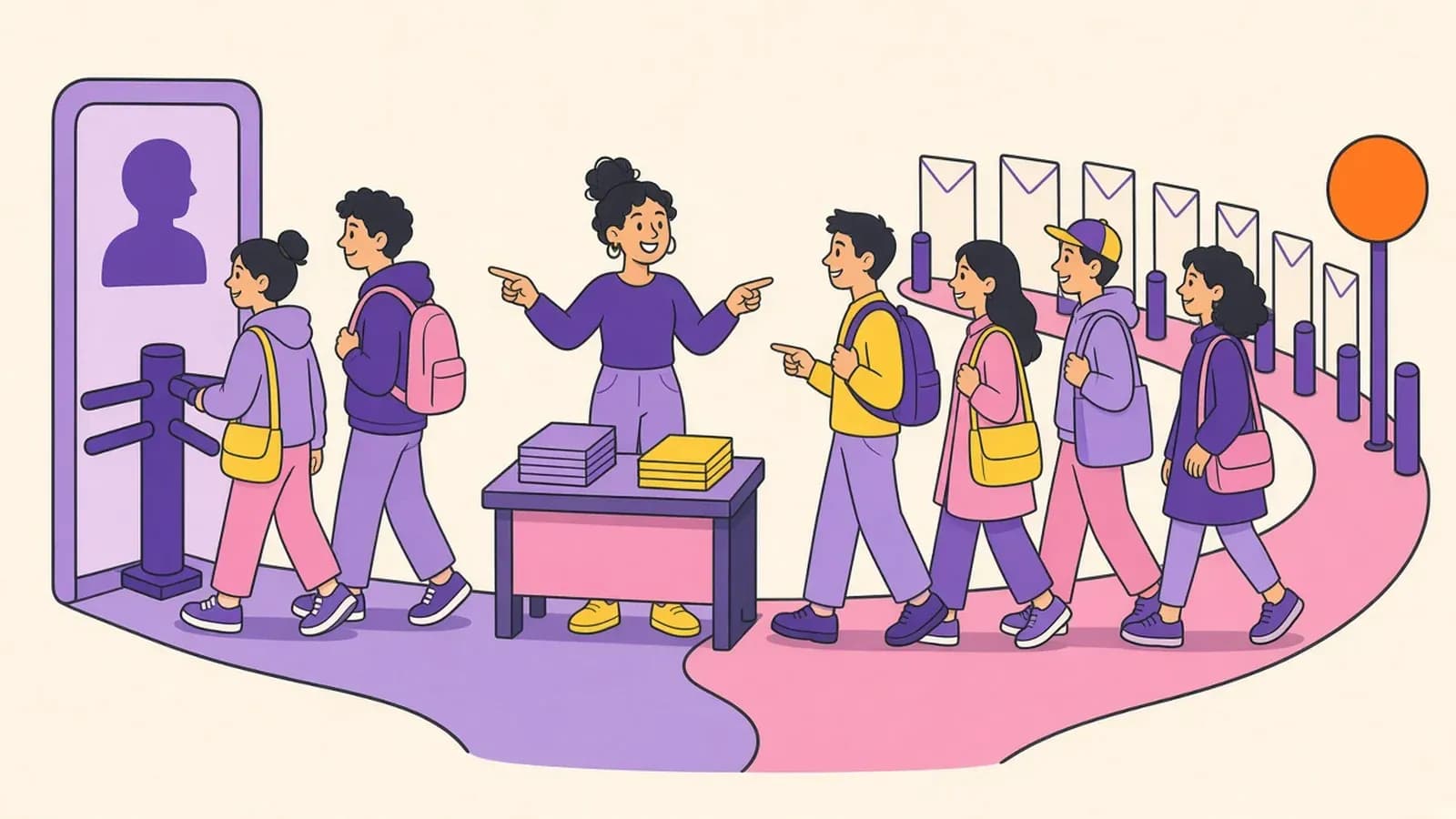
Before you write a word, pick one group of buyers and one problem they share, and write to them only. A sharp email sent to the wrong list still gets no replies. In our experience the list and the offer decide the reply rate more than any single line of copy.
What are the five parts of a cold email?
A cold email has five parts, and each one has a single job. If a sentence doesn't do one of these jobs, cut it.
| Part | Its job | Size | What usually breaks it |
|---|---|---|---|
| 1. Subject line | Look like a note from a person, not a promotion | Under 6 words, ideally 3-4 | Title Case, "Quick question", exclamation marks |
| 2. Why them, why now | Prove this wasn't sent to 10,000 people | 1-2 sentences | "I hope this finds you well", opening with your name |
| 3. Problem and offer | Say what you fix and for whom | 1-2 sentences | Feature lists, adjectives, company history |
| 4. Proof | Make the claim believable | 1 sentence | "Trusted by 500+ companies" |
| 5. One ask | Give them something easy to answer | 1 short question | A demo link, or two asks at once |
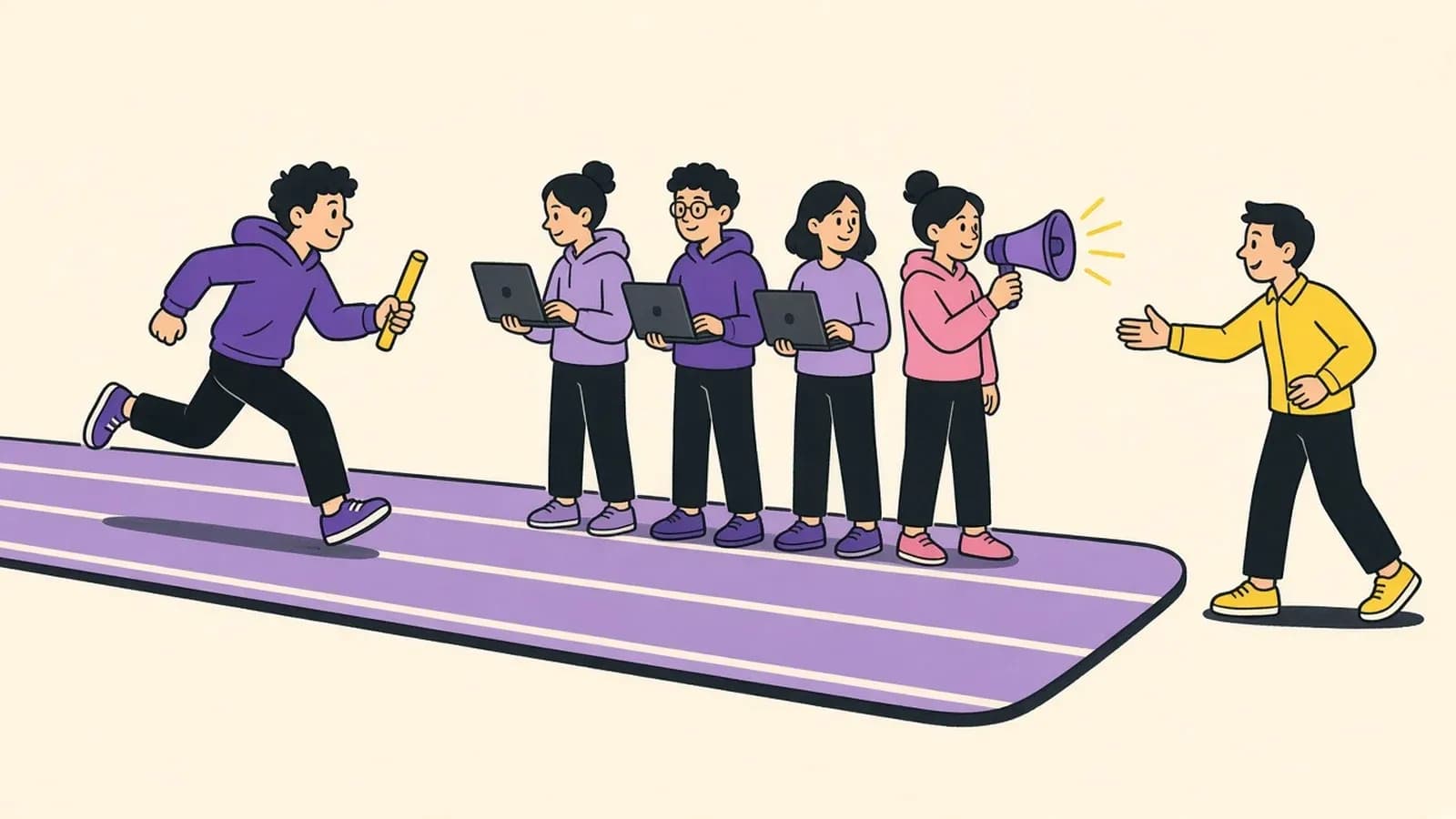
Copywriting formulas like AIDA, PAS (problem, agitate, solve) or before-after-bridge put the same jobs in a different order. Use one if it helps you draft. The reader still needs all five.
1. Subject line: write it like a note to a coworker
The subject line has one job: get the email opened as a normal message. Keep it under six words, ideally three or four, lowercase except the first letter and names, and point it at the first line. "Fabrikam's AR hiring" works. "Revolutionize Your AR Process!" reads like a newsletter and gets treated like one.
Tie it to the first line: if the subject names their new warehouse, the first sentence is about the warehouse. Skip Title Case and punctuation, which read as marketing, and ALL CAPS, which some spam filters score on the subject line alone. And never fake a "Re:" or "Fwd:". It buys one open and burns the trust you need for a reply.
Boomerang's data, which we covered in our post on cold email length, found that 3-4 word subjects drew the most responses, across all kinds of email, not only cold. Our subject line tester scores a subject and shows how Gmail and Outlook cut it off on a phone.
2. Opening line: why them, why now
The first sentence is the most important line in the email. It's where the reader decides if this is about them or about you.
Write one true fact about their company and connect it to why you're writing. Good facts are recent and visible: a new location, a job post, a launch, a new leader, a tool they switched to. A compliment with no reason behind it ("Love what you're building!") doesn't count.
Use this test. Swap in a competitor's name. If the sentence still works, it isn't personalized. "I see you're a leader in logistics" passes the swap. "Saw you opened a third warehouse in Leeds and posted two dispatcher jobs" doesn't, and that's the point.
At volume, this line is the hard part. In Kenso, AI personalization writes a first line for each contact, and drafts wait for your approval by default. The free AI personalization tool shows the first line Ken would write to you.
3. Problem and offer: one sentence each
Name the problem the way they'd say it, then say what you do in one sentence a new hire could repeat. "We automate payment reminders and match incoming payments to invoices" is an offer. "Our AI-powered platform unlocks finance efficiency" is fog.
Describe the outcome, not the product: fewer late invoices beats "real-time insights". And delete adjectives. Leading, seamless, cutting-edge and innovative add words and take away trust.
4. Proof: one specific, not a crowd
Proof turns your offer from a claim into something that happened. One line does it: a customer like them, a number and a timeframe. "A building-supply distributor your size cut days sales outstanding from 52 to 41 in one quarter" is proof. "Hundreds of happy customers" is not, because anyone can write it.
Name the customer when you have permission. When you don't, describe them closely enough that the reader sees themselves.
5. One ask: a question they can answer in a word
End with one easy question about interest, not a meeting request. "Worth a look?" or "Is this on your plate this quarter?" can be answered in a word. "Can you do 30 minutes Tuesday?" asks a stranger for time before they care.
The data points the same way. Gong's 2020 analysis of 304,174 sales emails, which we summarized in our post on calendar links, found that interest questions did best on cold email. Asks for a specific time had a 15% success rate on cold emails, against 37% once a deal was underway.
So we skip the booking link in email one. In our own first-email data, emails with a link drew fewer human replies, and the fairer comparisons put the cost somewhere between almost nothing and half your replies. Send the link once they write back.
The signature and the P.S.
Keep the signature plain: name, title, company. Leave out logos, banners and booking links. For US email, the FTC's CAN-SPAM rules make no exception for B2B: include a valid postal address and a clear way to opt out, and honor opt-outs within 10 business days. A line like "Reply 'no thanks' and I won't email again" does the job. Our cold email templates page covers these basics.
A P.S. is optional. If you use one, make it one plain line with a second reason to reply, not a second pitch.
What does a good cold email look like? A before-and-after
Here's a made-up example: Sam sells accounts receivable software and writes to Dana, a finance leader at a building-supply distributor. The company and the numbers are invented. Use your own real ones.
The first draft, the kind most of us write first:
Subject: Revolutionize Your AR Process - Quick Question!!

Hi {{first_name}},

I hope this email finds you well. My name is Sam and I'm an Account
Executive at Northwind, the leading AI-powered accounts receivable platform
trusted by over 500 innovative companies worldwide. We are passionate
about helping finance teams unlock efficiency and drive growth.

Our cutting-edge solution leverages machine learning to automate
collections, reconcile payments and deliver real-time insights.
Customers love our seamless integrations and world-class support.
Don't miss out: we're offering 20% off for a limited time.

Would you be open to a 30-minute demo this week? You can book directly
here: https://calendly.com/sam-northwind/30min. Also, let me know if you'd
like our case study deck or if there's someone else I should talk to.

Best regards,
Sam
The rewrite, built from the five parts:
Subject: Fabrikam's AR hiring

Hi Dana,

Saw Fabrikam opened a third warehouse and is hiring two AR clerks.
At that stage, the chasing usually grows faster than the team.

We automate payment reminders and match incoming payments to invoices.
A building-supply distributor your size cut days sales outstanding from
52 to 41 in one quarter, with no new hires.

Worth a short look before you fill both roles?

Sam
Northwind
We ran both through the grader's rule checks on November 21, 2026. These are the checks that need no model (the free API behind the cold email grader, rules version 2026-10-17.1). The draft scored 43 out of 100. The rewrite scored 98.
| Rule check | Points lost, draft | Points lost, rewrite | What it caught in the draft |
|---|---|---|---|
| Spam words | 18 | 0 | "Don't miss out", "20% off", "limited time" |
| AI tells and stock phrases | 15 | 0 | "I hope this email finds you well", "leverages", "seamless", "cutting-edge" |
| Subject line | 10 | 2 | Title Case, "!!", "Quick Question", ALL CAPS "AR" |
| Length | 5 | 0 | 118 words, over the grader's 90-word window |
| Formatting | 3 | 0 | "20%" reads as a promise |
| Links | 3 | 0 | A link in a first email |
| Reading level | 3 | 0 | Grade 8.1, against a target of 8 or lower |
| Rules score | 43 | 98 |
Two things stand out. First, length was the smallest problem in the draft. At 118 words it sits inside the 50-125 band we recommend, and our reply data found no length effect inside a campaign. Spam words, stock phrases and a promotional subject cost it far more: 43 of its 57 lost points.
Second, the rewrite lost 2 points for "AR" in capitals. A finance reader writes AR every day, so we'd keep it. A grader marks what might cost you. You still decide.
The full grader on the page adds a rubric that reads the email the way a busy buyer would. It asks whether it's relevant, whether anything in it is true only of this reader, how clear the ask is and whether it sounds like a person. It also writes a rewrite.
How long should a cold email be?
Aim for 50 to 125 words, then stop worrying about length. In our data, the campaign decided the reply rate, not the word count.
We looked at every first email sent through Kenso between February 25 and August 3, 2026: 52 campaigns in 16 workspaces, human replies only. Then we compared longer and shorter emails, first with all emails pooled, then inside the same campaign.
| Comparison | All emails pooled | Inside the same campaign |
|---|---|---|
| 150+ words vs 100-149 words | 1.35x the replies | 0.97x (95% interval 0.73-1.29) |
| 100+ words vs under 100 words | 1.44x | 0.99x (0.62-1.59) |
Source: How long should a cold email be?, Kenso sending data.
Pooled, longer emails look better. Inside one campaign, the gap disappears. That's because 70% of the variation in length sits between campaigns: whoever writes the template sets the length, and good and bad campaigns happen to land at different lengths.
The data has limits. Inside one campaign, most emails sit within 10 to 15 words of the average, and only 4% of our first emails were under 75 words. So it can't tell you whether an 80-word template beats a 160-word one for the same list. What it shows is narrower: we saw no sign that a personalized line adding 10 to 20 words cost replies, though a small cost could hide in the noise.
Real B2B first emails also run longer than the advice. The median in our data was 130 words, greeting and signature included, and only 18% came in under 100. One finding holds across the studies we lined up: every dataset that split out emails past 300 words saw them do worse.
Our grader's length check is stricter than this data. It wants 50 to 90 words and takes points above that. If a draft passes everything else and only loses length points at 110 words, our data gives you no reason to cut it.
Which persuasion tricks actually work in a cold email?
Sales guides borrow a lot from psychology: scarcity, social proof, loss aversion, reciprocity. In October 2026 we checked 12 of these famous effects against the largest and most careful tests run since. Only 4 of 12 held up. Where a classic study and a large test could be compared, the large test found a median 25% of the original effect. The full review is in Which persuasion science survived the replication crisis?.
Here's what that means for the lines people put in cold emails:
| Cold email tactic | The effect behind it | Grade | What large tests found | What we'd do |
|---|---|---|---|---|
| Use their name | Name personalization | Replicated | One large email test: sign-ups rose from about 12.5% to 15.6%. A 2023 replication of a famous subject-line test found no effect | Use it. Don't expect it to carry the email |
| Give something first (a teardown, a benchmark) | Reciprocity | Replicated | d = 0.24, against 0.41 in the classic study | Worth doing, for a modest lift |
| Fewer options, one ask | Choice overload | Replicated | Real, but 7% of the famous jam study's size | One ask. Mostly for clarity |
| A defensible number up front (a list price, a reference deal) | Anchoring | Replicated | The only effect that came out larger, and the only one rated as transferring well to B2B buying | Use real numbers you can defend |
| "Teams like yours use us" | Social proof | Mixed | d = 0.12. 7 of 12 large or pre-registered field tests found an effect | A few percent at best |
| "Only 3 spots left" | Scarcity | Mixed | No large field test. Meta-analyses find small effects with no correction for unpublished nulls | Skip fake deadlines. They're spam words too |
| "Here's what you're losing" | Loss-aversion framing | Mixed | d = 0.02 pooled across three large tests | State the problem plainly. The frame won't double anything |
| A decoy option | Decoy effect | Failed | d = 0.00 across more than 140,000 flight-booking sessions | Don't bother |
| "Because" with any reason | The "because" effect | Never tested at scale | No large study found | Give a real reason or none |
Cohen's d: 0.2 is small, 0.5 medium, 0.8 large. Source: Kenso Research review of 132 sources, databases searched October 15, 2026.
You'll still read that framing a pitch as a loss makes buyers twice as likely to care. The three large tests found a pooled effect of d = 0.02, close to nothing. One caveat: most of this evidence comes from consumers, students and survey takers, not professional buyers.
Our takeaway is simple. The tactics that survived are the honest ones: a real name, a useful thing offered first, one clear option and a number the reader can check. Pressure tactics either failed or were never tested at scale.
Which cold email rules hold up, and which are folklore?
The guides we read repeat many of the same rules. Here's what each one rests on, as far as we could find.
| Popular rule | What's behind it | Our verdict |
|---|---|---|
| "Keep it under 75 (or 100) words" | Pooled studies that mix different senders and lists | Partly true. Stay in 50-125 and cut sentences, not to a number |
| "The 30/30/50 rule" | Four of the guides we read cite it, with three different meanings. In two of them, the shares of your effort or success add up to 110% | Ignore the numbers. "Follow up" is the useful part |
| "Most replies come from follow-ups" | In our data, 59% of people who replied as humans did so after a follow-up | Holds. Send 3-4 emails |
| "Send Tuesday through Thursday mornings" | One guide we read says Monday or Tuesday mornings. Another says Tuesday through Thursday, because Mondays are crowded | Pick business hours in their time zone and move on |
| "Frame it as a loss" | Pooled d = 0.02 across three large tests | Doesn't hold up |
| "Add a Calendly link to make it easy" | Our data: a link costs somewhere between almost nothing and half your replies | No link until they reply |
| "Judge subject lines by open rate" | Opens are unreliable on cold email | Judge by replies |
On the last row: Kenso doesn't track opens at all. Campaign emails never carry an open-tracking pixel. Opens are not tracked and are never reported. We judge a subject line by the replies its email gets. We explain why in why we turned off open tracking.
How do you check a cold email before you send it?
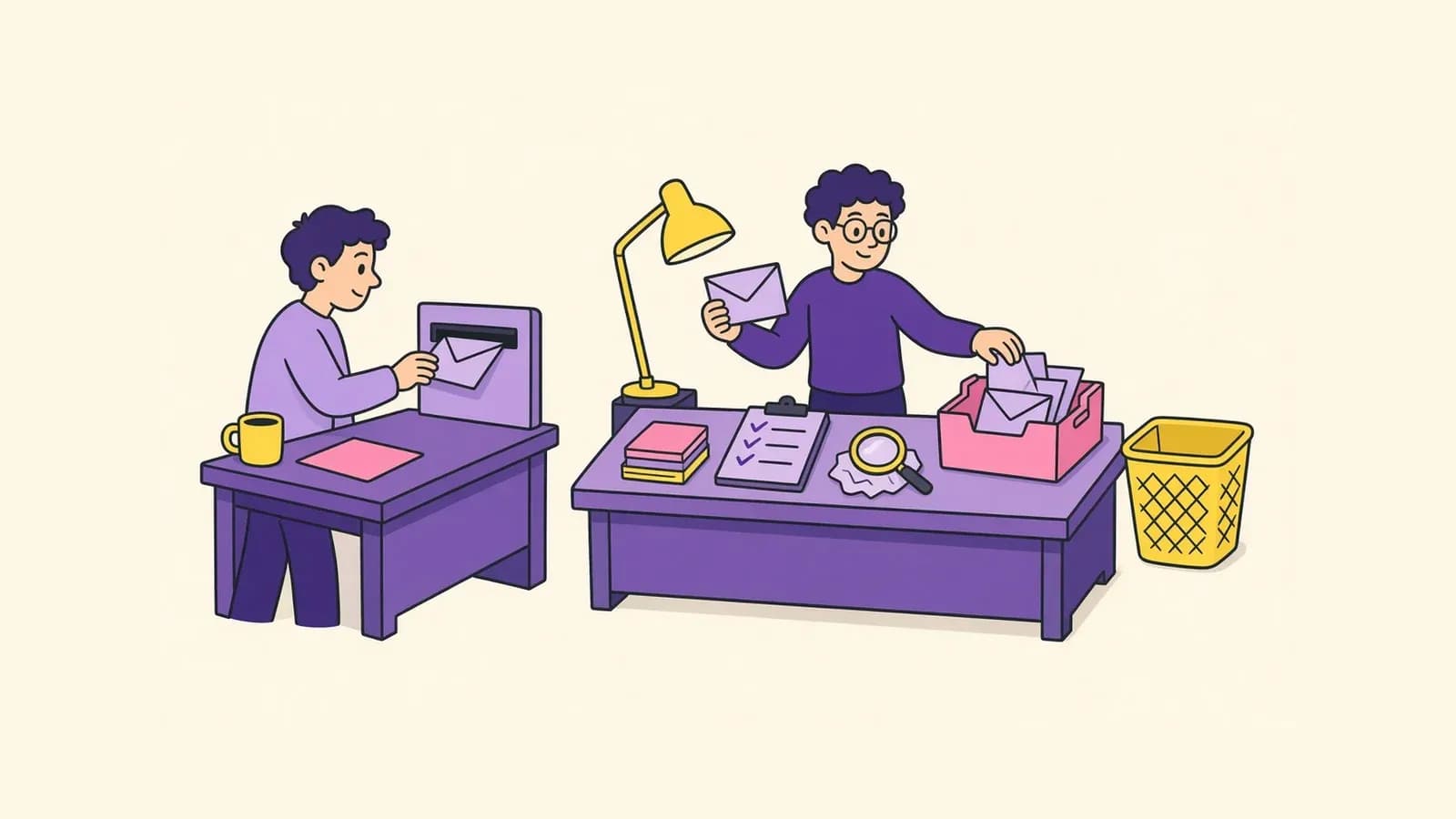
Read it once, fast, on your phone. Then run it through a checklist and a grader. Here's the checklist we use:
- One-read test. After one skim, can you say what's offered and what's asked? If not, rewrite before you edit.
- Swap test. Put a competitor's name in the first line. If it still works, write a real reason.
- Count the asks. Exactly one.
- Find the proof. One number or one customer like them. Brochure claims don't count.
- Cut stock phrases. "I hope this finds you well", "My name is", "I wanted to reach out" and every adjective you wouldn't say out loud.
- Strip the extras. Plain text, no images or attachments, no links in the first email.
- Check merge fields on every row. One empty field sends "Hi ," to a real person. Our merge tag checker finds those rows in your list.
- Add the basics. Postal address and an opt-out line.
- Grade it. Fix what the grader marks until the score reads keep.
The cold email grader scores an email out of 100 as the average of six scores: relevance, personalization, call to action, length, deliverability and readability. 80 and up is keep, 60 to 79 is rewrite, under 60 is start over, and every line that lost points gets its reason. It's free with no signup, for 3 full grades a day. For one problem at a time, the spam word checker highlights risky words with a plainer word for each.
Inside Kenso, the same kind of check is built into sending: every email gets a spam and quality check before it sends.
How should you format a cold email so it reaches the inbox?
Format a cold email like a note between two people. Plain text, short paragraphs of one or two sentences, no bold, no images, no HTML signature and no attachments. We leave links out of the first email for the reply cost above. If one has to go in, use one short link on your own domain, written out as a visible address on its own line.
Content isn't the main thing that decides the inbox. Gmail and Outlook lean mostly on your sender reputation and authentication, while corporate security gateways still score the words. A plain email with no spam words is safe on both. The bigger levers are setup: send from separate sending domains, never your main domain, and check SPF, DKIM and DMARC with our domain health check. Our cold email deliverability guide covers the rest.
How do you write cold email follow-ups?
Write each follow-up in the same thread, shorter than the first email, and give it a new reason to reply. A different proof point, a useful resource or a sharper question all work. "Just bumping this" doesn't.
Follow-ups aren't optional. In our data, 59% of people who replied as humans did so after a follow-up, and per email sent, our fourth email earned human replies at 0.99x the rate of the first. Our templates use a 3-email timing: day 1, day 4 and day 9. End with a short close that makes "no" easy to say, and stop.
FAQ
Should I use a cold email template?
Use a template for structure, never for the first line. Our cold email templates page has 8 first emails under 80 words, each with one ask. Fill the "why them, why now" line yourself or have it researched for every contact.
Can I use AI to write cold emails?
Yes for drafts, as long as a person checks them. AI drafts tend to pick up the same stock phrases and adjectives, and the grader flags those. Read every draft as the buyer would before it goes out.
What reply rate should a cold email get?
It depends far more on the list and the offer than on the copy, and published rates vary a lot. Our guide to cold email reply rates explains why the benchmarks disagree.
Is cold email legal for B2B?
In the US, yes, under CAN-SPAM's conditions: an honest subject line, your postal address, a clear opt-out and opt-outs honored within 10 business days. Canada's CASL needs consent, usually implied for B2B, and in the EU and UK, GDPR means telling people where you got their data. Our compliance checker checks a draft against CAN-SPAM, GDPR, PECR and CASL. It isn't legal advice.
Write it, then grade it
Write the five parts, keep it between 50 and 125 words, ask one easy question and send 3-4 emails in a thread. Then paste your draft into the cold email grader and fix what it marks.
If you'd rather have it done for you, with Kenso's Performance option our team runs it, from $75 per held meeting plus contact fees ($500 a month minimum), for B2B companies with 10+ paying customers. Details are on the done-for-you page.