
Email Warmup for Cold Outreach: Private Warmup vs Warmup Networks
Private email warmup vs shared warmup networks: why pooled stranger engagement gets fingerprinted, and how owned-infra ramp builds real reputation.
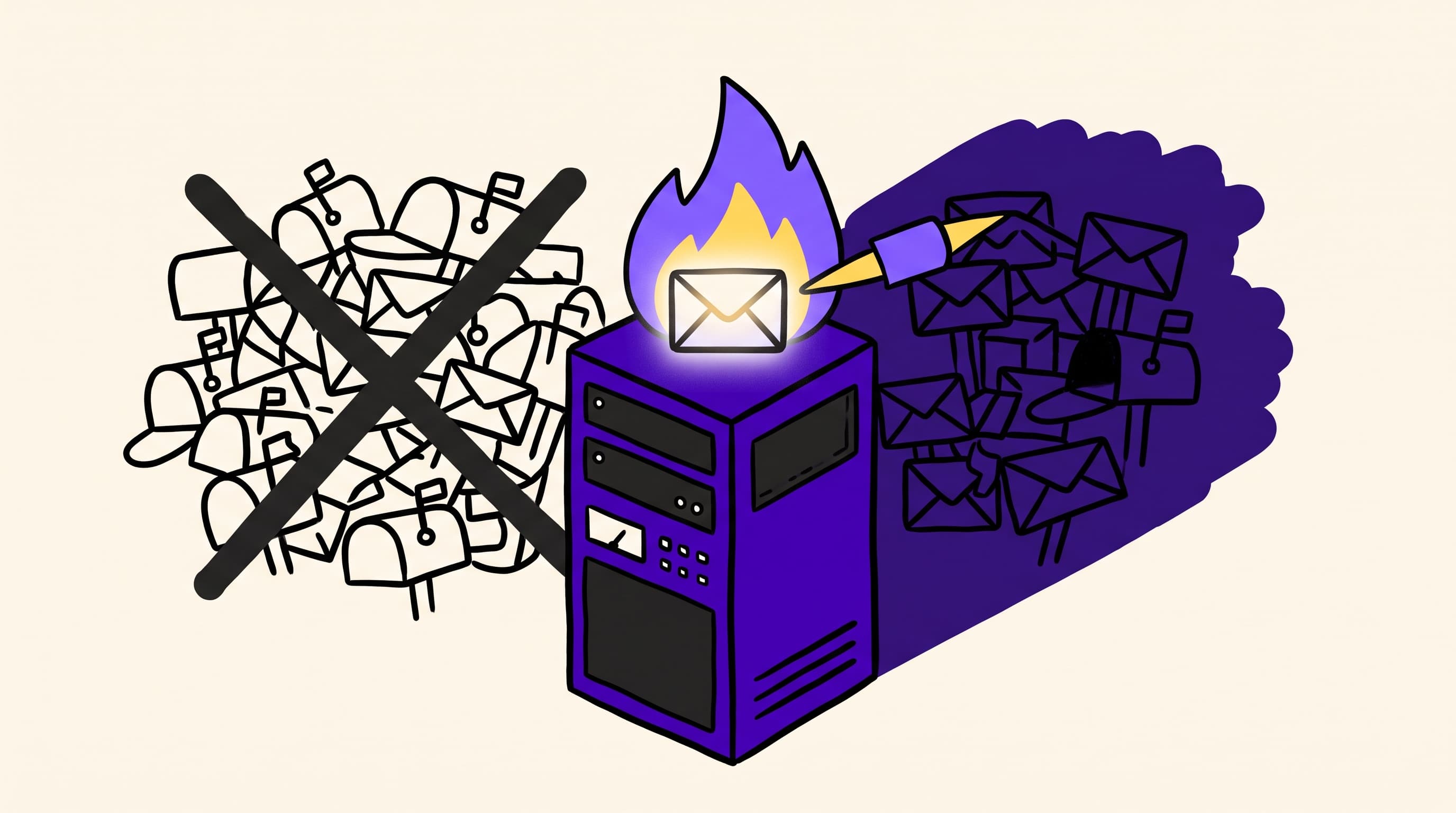
Email warmup for cold outreach is the controlled ramp of a new domain or inbox so mailbox providers learn you are a real sender before real campaigns start. In 2026 that still matters — but “warmup” now names two different products. One is private warmup on infrastructure you control. The other is a shared pool of strangers’ mailboxes exchanging synthetic opens and replies. They are not interchangeable, and treating them as the same product is how teams buy a reputation problem dressed as insurance.
This guide is the mechanical version of that split: what warmup is for, why pooled networks get fingerprinted, how private warmup differs, a practical ramp schedule, and when you can skip the industry’s favorite checkbox.
What is email warmup?
Email warmup is how a new (or repaired) sending identity builds a short history of authenticated, low-volume, positively engaged mail before it carries full cold volume.
Mailbox providers score senders on patterns: authentication, bounce rate, spam complaints, volume shape, and engagement. A brand-new domain has almost none of that history. Cold outreach is already hard because recipients never opted in — so a sudden burst of outbound from a silent domain looks like the opening move of a spam operation.
Warmup is supposed to fix the silence problem: ramp volume gradually, collect positive signals, then introduce real campaigns. That definition is still correct. The industry argument is about how those signals are produced.
Warmup is not a substitute for SPF, DKIM, and DMARC. It is not a substitute for list verification. It will not rescue copy that trains complaints. If authentication is broken, warmup compounds the damage; if the list is dirty, real campaigns overwrite whatever the warmup dashboard claimed.
For the full stack around authentication, list hygiene, and monitoring, see our cold email deliverability guide.
Private warmup vs pooled warmup networks
Most “email warmup tools” put your mailbox into a shared network. Your inbox sends short messages to other participants. Those participants auto-open, auto-reply, star, and drag mail out of spam. You do the same for them. The dashboard shows beautiful engagement. That is the product.
Private warmup is a different mechanism wearing the same word:
- Signals are generated on infrastructure you operate (or a vendor operates exclusively for you), not in a multi-tenant pool of cold senders.
- Volume ramps against real operational controls — dedicated IPs, owned domains, monitored placement — not against a black-box peer graph.
- The goal is a stable sending history the provider can attribute to your identity, not a perfect engagement curve manufactured by strangers.
| Dimension | Pooled warmup network | Private warmup on owned infra |
|---|---|---|
| Mechanism | Your mailbox exchanges synthetic mail with many other customers’ mailboxes | Gradual real ramp on domains/IPs you control, with engagement from a closed or operator-owned set |
| Who is in the graph | Strangers — including other cold senders recovering damaged reputations | You (and, if managed, only that operator’s controlled fleet) |
| Fingerprint risk | High: timed replies, template loops, and dense peer graphs are detectable patterns | Lower: volume shape and auth look like normal operational ramp |
| Neighborhood risk | Your reputation is partly linked to the worst actor in the pool | Contagion is limited to your own fleet and configuration |
| Who controls the IP | Usually the tool’s shared or mixed infrastructure | You or a platform that owns dedicated sending IPs end to end |
| Cost shape | Per-inbox SaaS fee on top of your sequencer | Bundled into owned sending infrastructure (or built in-house) |
| What the dashboard optimizes | Warmup “score” and simulated reply rate | Inbox placement on real seed tests and live campaign reply health |
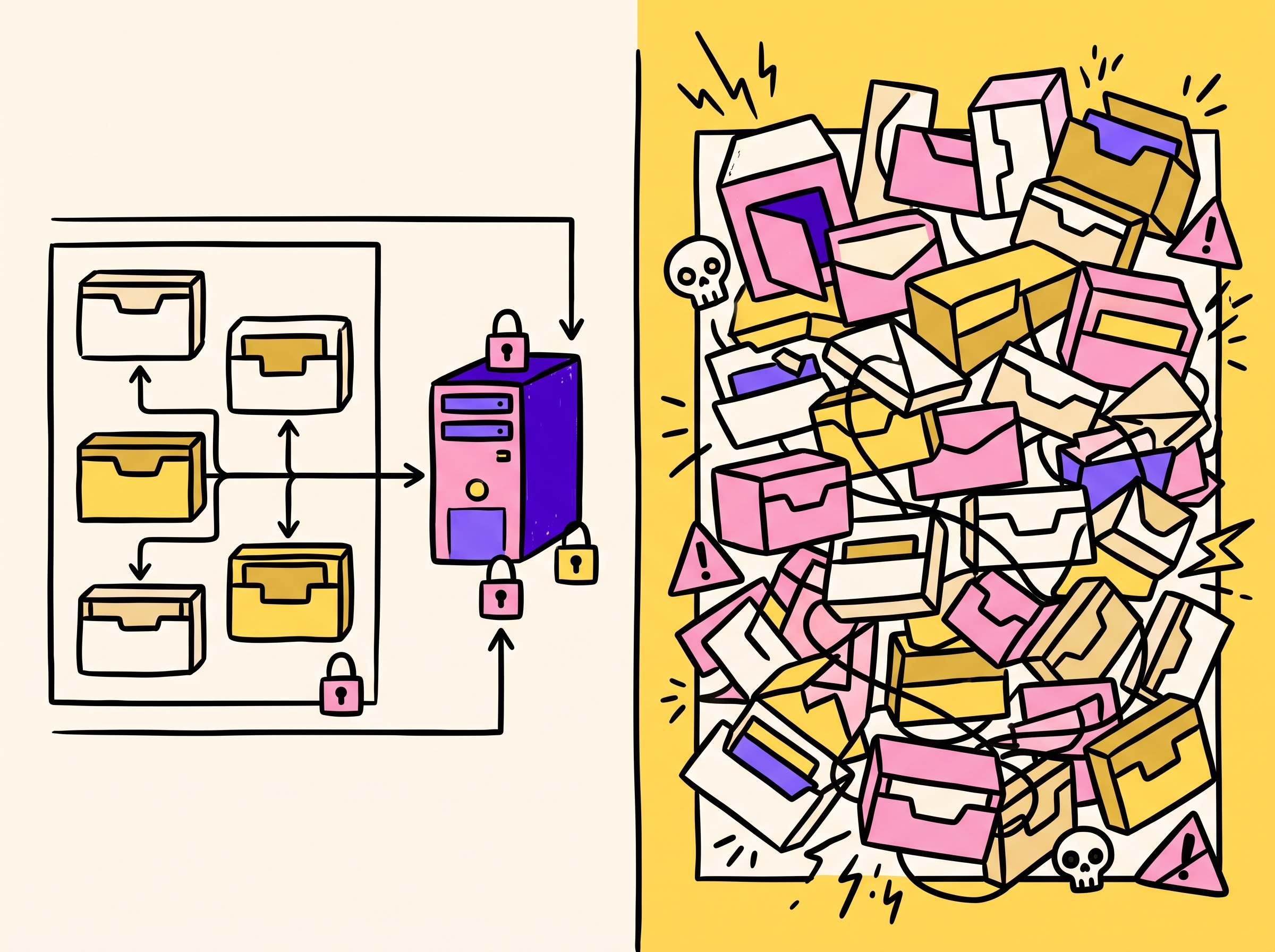
The useful question is not “does warmup work?” It is “whose reputation graph am I joining?”
Can warmup networks actually hurt deliverability?
Yes — not always immediately, and not always as a bounce. The failure modes are quieter.
1. Pattern fingerprinting. Shared pools often produce mechanical timing, similar reply lengths, high open-to-send ratios, and dense mutual interaction graphs. Operators and independent deliverability writers have been documenting this through 2025–2026: providers discount engagement that looks like network theater, and in worse cases treat the association itself as a risk signal (The Inbox Ledger on warmup limits, EmaReach on pool neighborhood risk, Alex Berman on contaminated pools).
The mechanism those sources keep hitting: detectable synthetic engagement is not the same asset as wanted mail from real recipients.
2. Neighborhood / contagion effects. In a shared pool, your mailbox is exchanging signals with every other participant. If the pool includes aggressive bulk senders, spam-adjacent domains, or recovering burned inboxes, you are shaking hands with them in the provider’s graph. A warmup pool is only as clean as its worst member.
3. Signal that does not transfer. Even when the pool “works,” the engagement is with network peers — not your ICP. The day you point the same domain at real cold prospects, reply rates drop and the synthetic average dilutes. Teams that never leave the pool confuse a dashboard with a market.
4. Permanent-crutch behavior. Running high-volume pooled warmup forever can itself become a signature: a sender that always looks like a network node rather than a business corresponding with humans. Several practitioners now treat pooled warmup as a time-boxed intervention, not a lifestyle.
None of this means “never warm a domain.” It means paying strangers to fake engagement is a different product from building sending history you control — and the first product is increasingly a liability you are billed for monthly.
How long does warming up a domain take?
For a new cold-sending domain with authentication already correct, plan on roughly two to four weeks before full campaign volume:
- Brand-new domain / new infra: closer to four weeks.
- New mailbox on an already-healthy domain: often two to three weeks.
- Recovery after a reputation hit: longer, and volume stays conservative until seed placement recovers.
Aggressive seven-day “done” ramps almost always look unnatural. Providers have seen millions of real inboxes; a cliff from zero to full throttle is a pattern, not a shortcut.
Keep a low maintenance baseline after launch if your platform supports private/maintenance warmup. Stopping cold the day campaigns start creates the same engagement cliff the industry pretends only affects other people. Pair that with the operational hygiene covered in our note on out-of-office replies and non-engagement — warmup cannot fix a sequence that keeps mailing empty desks.
A practical ramp schedule (without the folklore ladder)
There is no universal magic ladder that every ESP secretly honors. The limiting function is reputation and engagement quality, not a poster that says “Day 12 = 47 emails.”
Use this as an operator template, then bend it with seed tests and live reply health:
| Phase | Days | Warmup / internal volume | Live cold volume | What must stay green |
|---|---|---|---|---|
| Foundation | 1–3 | Auth + DNS only; zero cold | None | SPF, DKIM, DMARC aligned; tracking domain set |
| Seed history | 4–10 | Low daily internal/private warmup | None | Placement tests not all spam; no auth fails |
| Soft launch | 11–18 | Maintain private baseline | Small batches to best-fit ICP only | Bounce under ~2%; complaints near zero |
| Scale | 19–28 | Maintain private baseline | Ramp toward your per-inbox operating cap | Stable placement; reply rate not collapsing |
| Steady state | 29+ | Light maintenance if needed | Normal operating volume | Weekly placement + Postmaster/SNDS checks |

Notes that matter more than the integers:
- Authenticate before day one of volume. Warming an unauthenticated domain is polishing a car with no engine.
- Prefer plain-text, human-looking messages during ramp. Gibberish “hello how are you” loops are a fingerprint.
- Cap each cold mailbox conservatively (many operators still live near the 30–50/day folklore band for cold volume — treat it as a ceiling to earn, not a right). Scale with more warmed inboxes and domains, not by forcing one mailbox.
- Run placement tests to real seed inboxes across Gmail, Microsoft, and Yahoo. The honest readiness test is where real-looking messages land — not a warmup vendor’s internal score.
If your platform already owns domains, inboxes, IPs, and private warmup as one system, you are not assembling this ladder from five vendors. More on that bet: why we own the cold email stack.
Do you need warmup if the platform owns the sending infrastructure?
You still need a ramp. You do not necessarily need a third-party pooled network.
When sending runs on dedicated IPs and operator-owned domains — with private warmup, monitoring, and backups inside the same system — the “warmup product” is part of infrastructure, not a bolt-on that joins you to every other cold sender on the internet.
That is how we run Ken. Warmup, domains, inboxes, and sending live on infrastructure we control. We are not asking your primary company domain to earn trust inside a multi-tenant engagement graph. In a controlled client move onto owned warmup and SMTP (same campaigns, same volume), inbox placement moved from 32% to 89% and live reply rate from 1.7% to 3.2% — the unglamorous lesson being that arrival is upstream of copy. Across our book we send 1M+ emails a month with 80%+ inbox placement and about a 3% reply rate when the full stack is healthy. Those numbers are not a promise that a pooled-warmup checkbox will print the same result on a DIY Instantly stack.
What to do instead of joining a random pool
- Fix authentication first — SPF, DKIM, DMARC aligned to the visible From domain.
- Separate cold from primary — secondary/lookalike domains for outbound; never burn invoices and recruiting with the same reputation.
- Verify every address before send; bounce rate is a reputation event, not a data inconvenience.
- Ramp on infrastructure you control — private warmup or a closed fleet, not the open commons.
- Judge readiness with seed placement and live replies, not a vendor’s internal “warmup score.”
- Keep non-engagement out of the system — pause OOOs, honor opt-outs, kill bad segments fast.
- Monitor continuously — Google Postmaster, Microsoft SNDS, blocklists, weekly placement tests.
Warmup is one line item in that list. It is not the list.
Frequently asked questions
What is email warmup?
Email warmup is the gradual building of positive sending history on a new or recovering domain/inbox so Gmail, Microsoft, and Yahoo have a reason to trust your mail before full cold volume. It is a ramp plus engagement history — not a spam bypass.
How long does warming up a cold email domain take?
Most teams need about two to four weeks after authentication is correct. New domains trend longer; new mailboxes on healthy domains can be shorter. Recovery after damage takes longer still. Skip the seven-day miracle schedules.
Do warmup networks still work in 2026?
Sometimes, briefly, on cleaner private or invite-only networks — and increasingly less as free/public pools get fingerprinted. The safer framing: treat shared multi-tenant pools as a risk product, and prefer private warmup on infrastructure you control.
Can warmup actually hurt deliverability?
Yes. Contaminated pools create neighborhood risk, synthetic patterns get discounted or associated with spam graphs, and permanent high-volume pooled warmup can itself look unnatural. Damage often shows up as silent spam/promotions placement, not hard bounces.
How many emails per day during warmup?
Start low and earn the right to increase. Many operators begin in the single digits to low teens of daily messages, then step up only while placement and complaints stay clean. There is no universal safe integer — the constraint is reputation, not a meme.
Do I need a separate warmup tool if my platform owns sending infrastructure?
Usually no. If domains, inboxes, IPs, private warmup, and monitoring are already one system, bolting on a public pool adds graph risk without adding control. You still ramp; you just stop renting strangers’ engagement.
The short version
Warmup still matters. Pooled stranger networks are not the only — or the safest — way to do it. Private warmup on owned infrastructure builds history without buying a seat in someone else’s reputation neighborhood. Pair that with authentication, clean lists, honest ramps, and continuous monitoring, and warmup stops being a dashboard religion and becomes what it always should have been: boring, controlled operations.
If you would rather not assemble that stack yourself, Ken runs private warmup on dedicated sending infrastructure as part of the platform — or as done-for-you. Or start lighter with Ken Daily: 10 verified leads every morning, free.