
Dedicated IP vs Shared IP for Cold Email: You're Asking the Wrong First Question
Dedicated vs shared IP is the wrong first question. Starve a dedicated IP and it looks like spam; share a dirty pool and you inherit complaints.
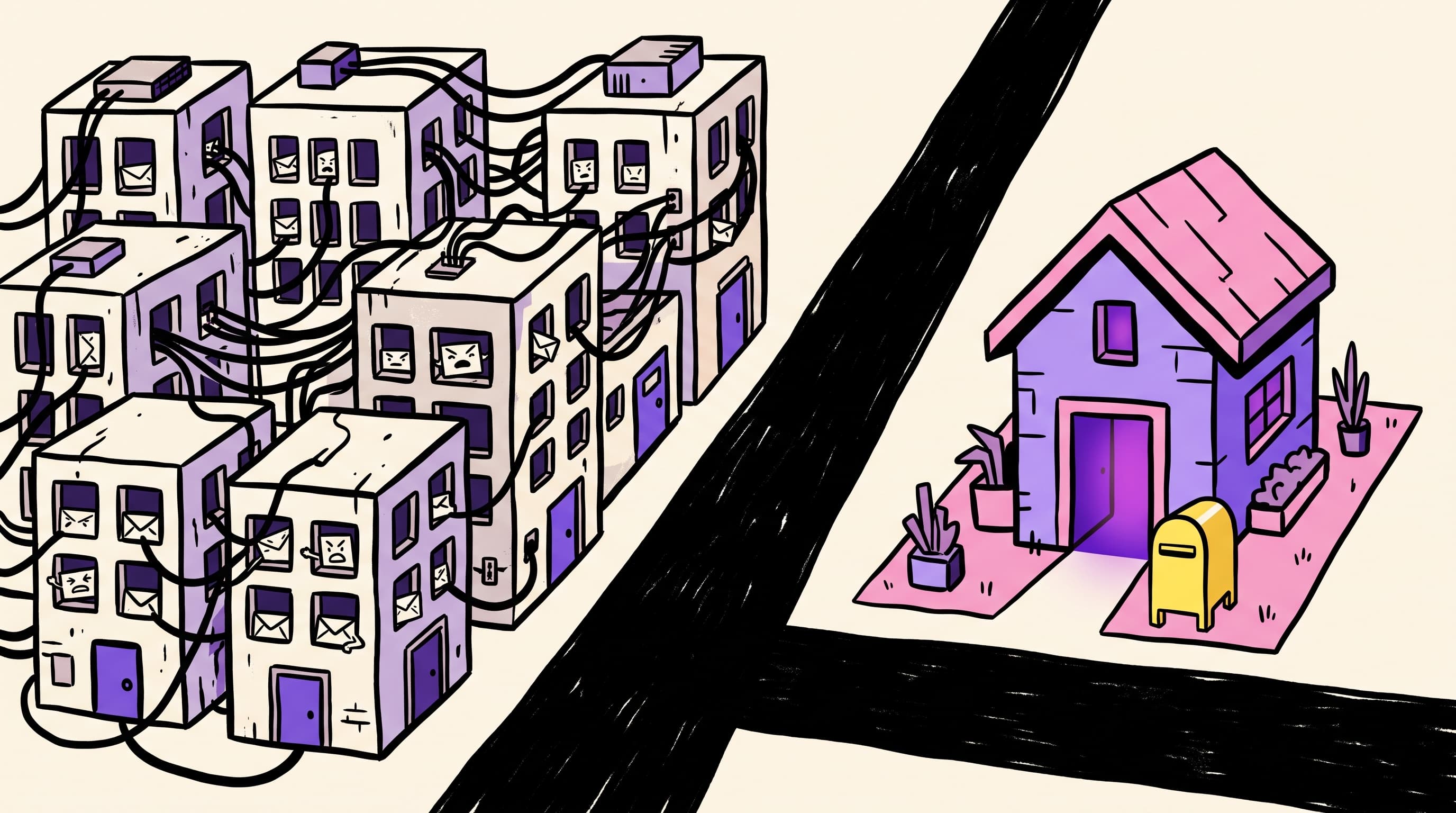
A dedicated IP is a sending address whose reputation is yours alone. It is not better than a shared IP by default. Under-fed dedicated IPs look like new spam sources. Crowded shared pools inherit strangers' complaints. The real split is who owns the neighborhood and whether your daily volume can keep it warm — not a pricing checkbox.
Most 2026 roundups pick a side and sell the matching product. Ken runs dedicated US/EU IPs because the book is 1M+ emails a month with 80%+ inbox placement as the operating target. A founder sending a few hundred a day should not copy that setup.
What is a dedicated IP in cold email?
A dedicated IP is an address that sends your mail and nobody else's. Providers score it on bounces, spam complaints, volume shape, and (increasingly) whether humans reply. Every signal attaches to you.
A shared IP is an address many senders use at once. You inherit the pool's history — the good and the garbage. You also inherit whoever joins next week.
Two shared neighborhoods are not the same place. Official Google Workspace and Microsoft 365 ranges carry the reputation of billions of legitimate messages. A cheap SMTP relay that packs cold-email customers onto one block is a different street. MailDeck's 2026 write-up is explicit about that split: ESP pools and generic shared SMTP are not interchangeable, even though both are "shared." Treat "shared" as a category, not a quality rating.
Dedicated is simpler to define and harder to operate. The IP starts at zero. MailChannels, citing Microsoft, is blunt: mail from a new IP is more likely to struggle until reputation exists. Isolation is the feature. Isolation is also the entire maintenance burden.
IP reputation is not the whole game. Gmail Postmaster tracks domain reputation, IP reputation, spam rate, and authentication as separate dashboards. A clean dedicated IP in front of a burned domain still loses. A healthy domain on a blacklisted IP may never get a conversation with the receiving server. Own both, or you are debugging the wrong layer. Authentication and list hygiene live in our cold email deliverability guide. This page is only the neighborhood.
Is a dedicated IP better than a shared IP?
No. Not as a default. Not as a status upgrade.
Dedicated is better when three things are true at once:
- Volume is high enough, every day, that providers can form an opinion about the IP.
- Cadence is boring — not a launch spike, two weeks of silence, then another spike.
- Someone actually watches Postmaster, SNDS, blocklists, and seed tests, because there is no ESP pool hygiene team catching a neighbor for you.
Shared is better when any of those fail. You borrow a thicker traffic pattern. You also accept that a stranger can have a bad Tuesday.
ColdMailer puts the founder case cleanly: cold outreach already runs at low per-mailbox volume, so most teams never generate enough consistent IP-level traffic to keep a dedicated address warm. Maildoso goes further and argues dedicated often hurts cold email, because you are the complaint source — concentrating those complaints on one address is how an IP goes to zero. That take is industry-specific (they sell rotation). The mechanism underneath it is real: cold mail produces some spam buttons. Isolation does not delete them. It files them under your name.
Dedicated is isolating. Shared is pooling. Pick based on whether isolation is an asset or a spotlight.
When does a dedicated IP actually hurt deliverability?
When the IP is quieter than the volume it was bought to carry.
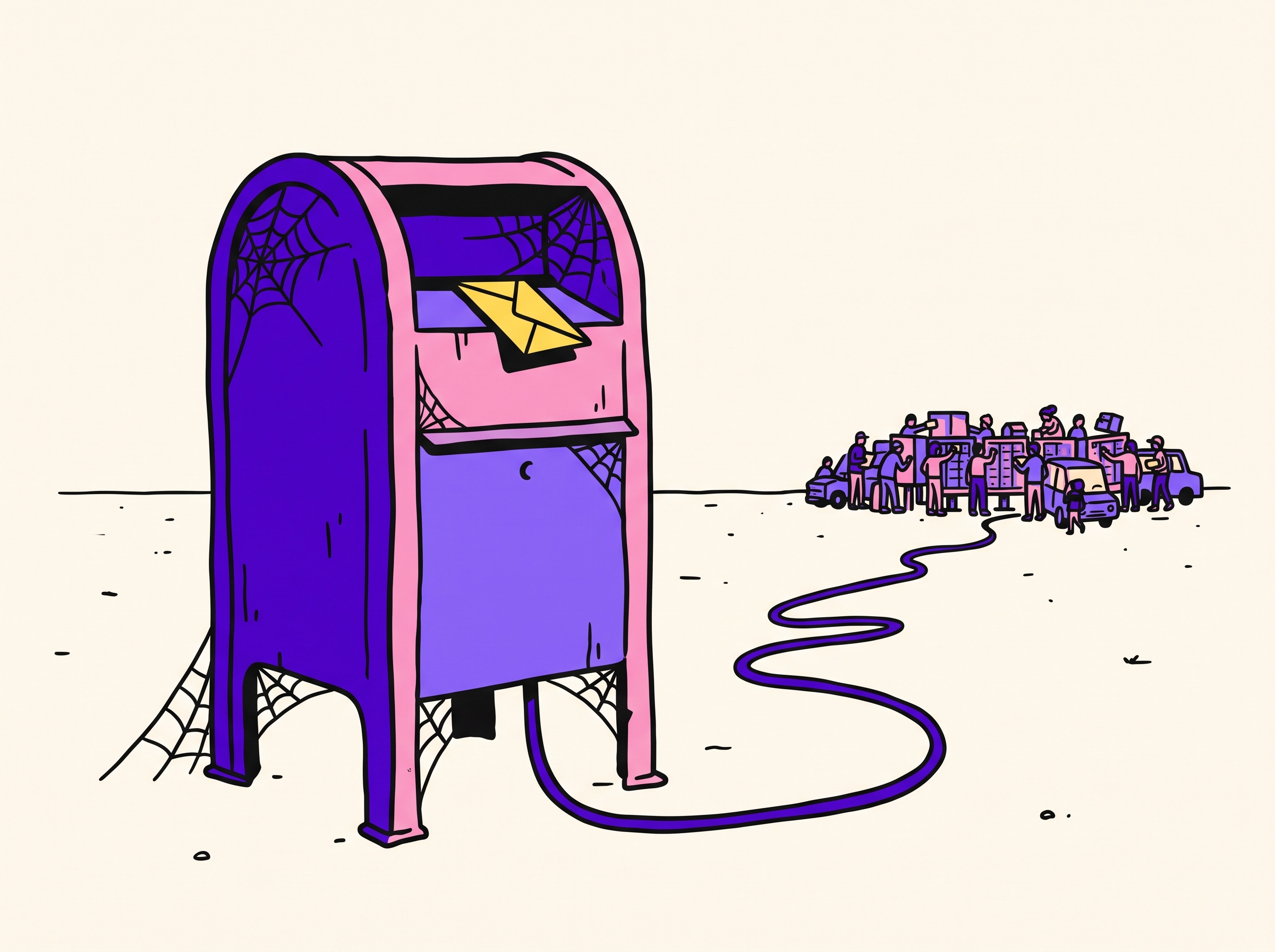
Mailbox providers need recent, continuous history. An IP that trickles, goes quiet, then bursts looks like a spam shop opening. WillItInbox calls a dedicated IP at roughly 20k messages a month a permanently lukewarm sender — classifiers barely see you. Acoustic warns that below on the order of 100,000 messages a month, providers often lack enough signal, and reputation sits in limbo.
Four failure modes show up over and over. None of them require a bad neighbor.
Starvation. You bought isolation and then could not feed it. The pool you left had more history than you can manufacture alone.
Burst cadence. Launch weeks and quiet weeks. Shared pools smooth that. Dedicated IPs record it as a spike from a semi-cold source.
Your own list, undiluted. A high-bounce segment on shared is one more messy tenant. On dedicated it is the biography of the IP until later mail overwrites it.
No owner. On shared, a competent ESP kicks abusers. On dedicated, you are the monitoring. If nobody opens Postmaster weekly, you paid extra for a liability.
A fifth waste: moving IPs to fix broken DMARC, a poisoned template, or targeting that trains complaints. Those follow you. You then spend four to eight weeks warming an address that still has the original disease.
How much volume do you need to keep a dedicated IP warm?
There is no Ken-certified cutoff. Anyone selling you one without telemetry is selling certainty. Public 2026 ranges cluster — they do not agree.
| Source (checked Aug 2026) | Stated floor / heuristic | What they actually mean |
|---|---|---|
| ColdMailer | Shared under ~50k/mo; dedicated starts to earn keep around ~150k/mo with an ops owner | Cold volume is low per mailbox; do not starve an IP |
| WarmySender | Shared under ~50k/mo; dedicated often necessary into six figures | Consistency plus volume; cold outreach lowers the threshold in their framing |
| WillItInbox | Shared under ~50k; dedicated viable ~50–100k if daily and clean; default dedicated at 100k+/mo steady | Consistency matters more than the headline total |
| Acoustic / Mailjet | Dedicated typically >100k/mo; Mailjet also cites ~3,000/day as a stability heuristic | Marketing/ESP docs, not cold-only |
Read that table as a disagreement about where the floor sits, and agreement about why a floor exists. Providers need data. Data needs daily mail. Founder-scale daily mail usually lives on mailboxes, not on a lonely IP.
Warmup, if you do go dedicated, is a project. Third-party ramps commonly run four to eight weeks (Mailjet says two to six, depending on cadence), starting tiny and increasing only while complaints and bounces stay green. Skip it and the new IP looks like a cannon. That ramp is not the same product as private mailbox warmup versus pooled warmup networks. You can need both; you cannot substitute one for the other.
Decision table: your daily volume, the neighborhood, the risk you accept
Use this as an operator worksheet, not a law. "Daily volume" here is cold volume you can actually sustain, not the number your sequencer will accept.
| Your reality | Neighborhood that usually fits | The risk you are accepting |
|---|---|---|
| A few hundred cold emails/day, one founder, bursty weeks | Reputable shared (Workspace / M365 on secondary domains, or a clean ESP pool) | A stranger can have a bad day. You avoid starving a private address. |
| Low thousands/day, still proving ICP and copy | Shared, maybe a small dedicated buffer later | You are still buying signal on copy and list, not on IP isolation. |
| High, boring daily volume (the public tables above), someone owns deliverability | Dedicated — often more than one IP, not a single hero address | You own every complaint. Warmup is weeks. Quiet weeks cool the IP. |
| Agency / multi-client book | Isolated dedicated per client or per stream — never one shared tenancy across clients | Isolation is the product. Sharing a dedicated IP across clients recreates the neighbor problem you paid to leave. |
| Irregular / seasonal / launch-only | Shared, or warm a dedicated IP weeks ahead of the spike | A quiet dedicated IP between campaigns is a cold start every time. |
Scale sideways first. How many cold emails you can send per day is a reputation function on mailboxes and domains. Adding warmed inboxes on secondary domains is how most teams grow without ever needing to debate IP SKUs.
Do Instantly and Smartlead give you a dedicated IP?
Sometimes, as an upsell. Not as the default sequencer.
Instantly. Light Speed adds SISR (Server and IP Sharding and Rotation): private servers and dedicated IP blocks, per Instantly's own post. Lower plans stay on shared infrastructure. You are still in Instantly's neighborhood. You do not take the block with you.
Smartlead. Dedicated sending is an add-on, now SmartInfra (formerly SmartServers): Single $39/month (one IP) and Multi $99/month (three IPs, auto-rotation). Unlimited mailboxes on shared IPs is unlimited surface area in someone else's pool. Confirm those prices on their page before you budget — add-on menus move.
Neither SKU deletes the volume problem. Isolation on a 400-email-a-day book is starvation with better branding. Isolation at real volume without watching complaints concentrates damage on an address with your name on it.
Ken's version is not a $39 line item. Sending runs on Ken-owned SMTP and dedicated US/EU IPs, with private warmup and monitoring in the same system — the bet in why we own the cold email stack. That is an operating choice at 1M+ emails a month. It is not a founder shopping list.
Should a founder buy dedicated IPs or add more mailboxes?
Add mailboxes. Then add domains. Then, if the book is still growing and daily volume is boring, talk about IPs.

A dedicated IP does not raise the safe send rate of a single inbox. Providers still watch the From address, the domain, and the IP. Pushing one mailbox harder because "we have a dedicated IP now" is how you burn three reputation layers at once.
The founder sequence that actually holds:
- Authenticate secondary sending domains. Never cold-send from the company domain that carries invoices.
- Verify every address. Bounce rate is an IP event and a domain event.
- Ramp inboxes. Keep per-mailbox cold volume conservative; grow the fleet instead.
- Watch placement on seeds, not a vendor warmup score.
- Only after the fleet is feeding a steady daily total that would actually occupy an IP, consider isolation.
If that list already sounds like a second job, that is the point. Ken runs it as done-for-you on Core ($597/mo) or VIP ($4,597/mo) — same software limits, different support — and you can also run the same motion in the app. Or start with Ken Daily: 10 verified ICP leads every morning, free, no card.
Frequently asked questions
What is a dedicated IP in cold email?
An IP address that sends only your mail. Reputation — bounces, complaints, volume shape, engagement — attaches to you instead of a pool. It starts at zero and has to be warmed. It is not a spam bypass.
Is a dedicated IP better than a shared IP for deliverability?
Only when you can keep it busy with clean, consistent volume and you will actually monitor it. For most cold programs, a reputable shared pool (especially official Google or Microsoft ranges on secondary domains) beats a starved dedicated IP. Dedicated wins at isolation, not at magic.
When does a dedicated IP hurt deliverability?
When volume is too low or too spiky to build history, when list hygiene is poor (those signals are undiluted), when nobody monitors the IP, or when you moved IPs to fix a domain, copy, or complaint problem the address never caused.
How much volume do I need to keep a dedicated IP warm?
Public 2026 heuristics cluster around tens of thousands to low hundreds of thousands of messages per month, with daily cadence. ESP docs often cite ~100k/month. Cold-email writers sometimes sit lower or higher. There is no universal integer. If you cannot describe this week's daily sends without hedging, you cannot keep an IP warm.
Do Instantly and Smartlead include a dedicated IP?
Not on the cheap default. Instantly's dedicated-style pooling (SISR) sits on Light Speed. Smartlead's dedicated servers are SmartInfra add-ons at $39/month (single) or $99/month (multi, three IPs). Confirm current packaging on their pricing pages before you budget — add-on menus move.
Should I buy dedicated IPs or just add more mailboxes?
Founders should add warmed mailboxes and secondary domains first. A dedicated IP does not make one inbox safe at 500/day. Buy isolation after the fleet already produces steady volume worth isolating.
The short version
Dedicated vs shared is a neighborhood question wearing a product label. Starved dedicated IPs look suspicious. Dirty shared pools pass around complaints. Pick the neighborhood you can keep warm and the neighbors you can live with. Ken runs dedicated US/EU IPs because the volume justifies the maintenance — most searchers should grow the mailbox fleet, not copy the IP architecture.
If you want the infrastructure owned inside one motion instead of assembled from sequencer add-ons, start at Ken or grab Ken Daily and ship from a list that will not poison whichever neighborhood you land in.