
Cold Email CTA: Ask Whether, Not When (10 Rewrites)
End email 1 with one yes-or-no question about your offer: no time, no link. Ask for a time only after they reply. 10 CTA rewrites inside.
Cristian Frunze · Nov 27, 2026 · 14 min read
- cold email cta
- cold email call to action
- cold email cta examples
- how to end a cold email
- sales email call to action
- cold email closing line
- interest based cta
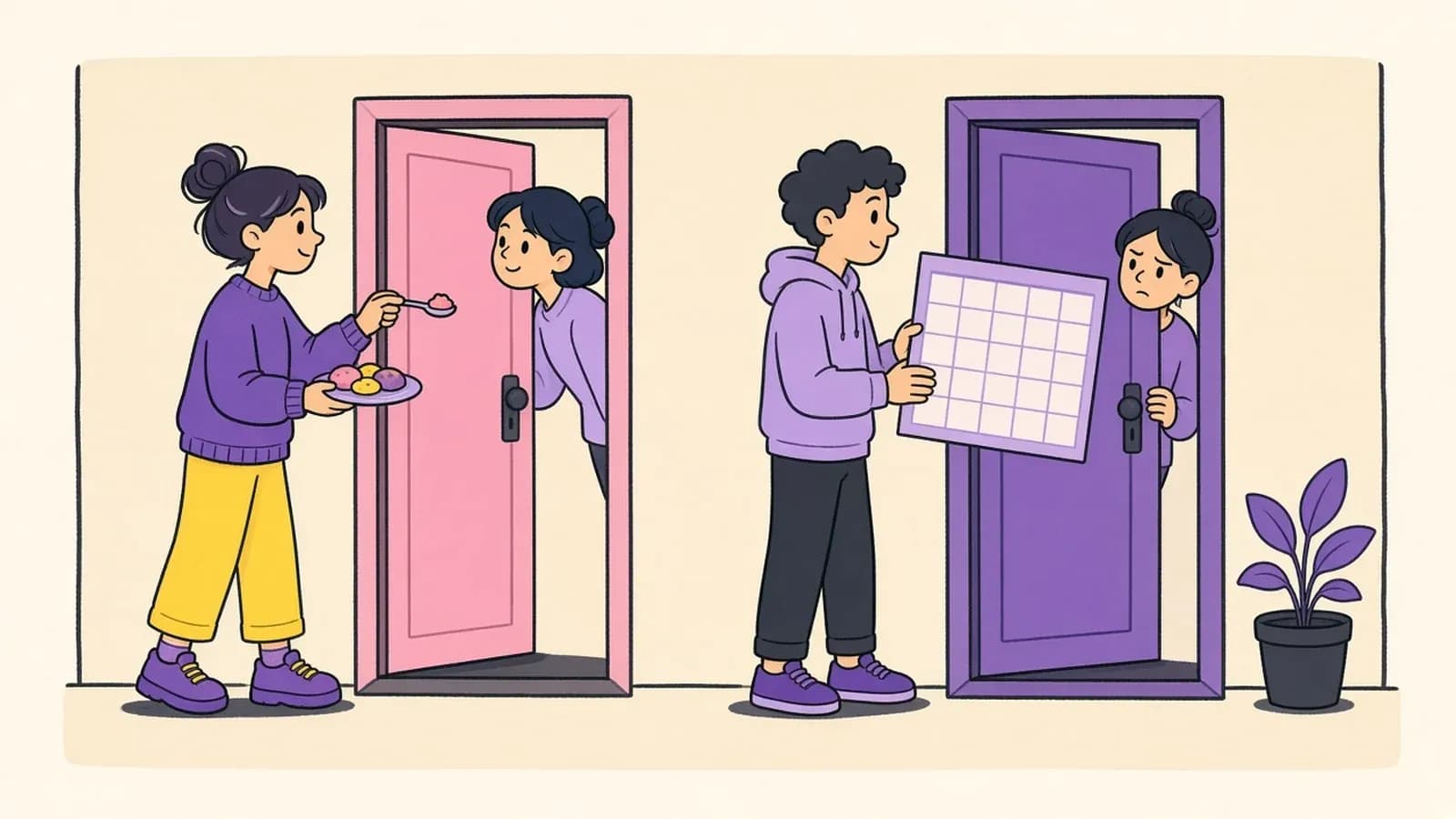
End your first cold email with one yes-or-no question about your offer, such as "Want me to send you the case study?", with no day, no duration and no calendar link. Ask for a specific time only after the person writes back.
Ask whether in email one. Ask when after a reply. That rule comes from data, not taste. Gong Labs sorted 304,174 sales emails by the type of ask and counted how often each one led to a meeting in the next 10 days. On cold emails, a question about interest got there 30% of the time. A specific slot like "Tuesday at 4pm?" got there 15% of the time. Once a deal was underway, the order flipped, and the specific slot won at 37%.
Senders on our platform almost never put a booking link in email one. Of the first emails they sent from February to August 2026, about 1 in 30,000 included anything resembling one. That's too few to measure. So this guide uses Gong's study for the ask and our sending data for what surrounds it: links, follow-ups and the reply that earns the meeting. Our calendar-link post covers booking links in a first email. This one covers every other ask.
What is a cold email CTA?
The CTA (call to action) is the line in your email that asks the reader for something. It usually sits right above your name, and it's usually a question, because the action you want from a stranger is a reply.
Most weak CTAs aren't badly written. They're badly sized. They ask someone who met you 40 seconds ago for half an hour of their week.
What should a cold email CTA ask for?
Ask for the smallest yes that still points at your offer. Here's the ladder, lightest ask first:
| Ask | Example | What the reader has to do | When to use it |
|---|---|---|---|
| Interest in the offer | "Want to see how it would work for {company}?" | Type "yes" | Email 1 and every follow-up |
| Permission to send something | "Want the teardown we did of [peer]'s onboarding?" | Type "sure" | When you have a real asset to send |
| Right person | "Is this yours, or does [team] own it?" | Name a colleague | When you're not sure who owns the problem |
| Open-ended meeting | "Open to a call next week?" | Agree to meet, then find a slot | Referrals, inbound leads, peers |
| Specific time | "Does Tuesday at 4pm work?" | Check a calendar and commit | After they reply |
| Booking link | "Grab a slot here: [link]" | Click, pick, fill in a form | After they reply, or when they ask for it |
Each row asks for more work and more trust than the one above it. A stranger gives you the top two rows cheaply. The bottom two are what you ask for once they've said yes.
What does the data say about each ask?
| Gong's ask type | Cold emails | Emails in an active deal |
|---|---|---|
| Interest ("interested in learning more about X?") | 30% | 25% |
| Specific time ("Tuesday at 4pm?") | 15% | 37% |
| Open-ended meeting ("time next week to meet?") | 13% | 32% |
Source: Gong Labs, 304,174 sales emails, published May 2020, checked November 2026. Success means a meeting booked within 10 days.
Two things stand out. On cold email, the interest ask at least doubled both meeting asks. And the two meeting asks scored about the same, so taking the day and time out of a meeting ask doesn't fix it. It's still a request for time.
The study is observational (sellers picked their own CTAs) and from 2020. A newer source points the same way. Hunter's State of Cold Email report (checked November 2026), built on 31 million emails sent in 2025 plus surveys, says decision makers would rather get asks like "Can I send more info?" or "Open to learning more?" than a meeting request in the first email. That finding is from the survey half of the report, not its email data.
Why does a meeting ask in email one book fewer meetings?
Three reasons, in the order we'd bet on them.
Time is the expensive ask. A meeting costs the reader 30 minutes plus the admin of finding them. Interest costs one word. Gong's explanation is loss aversion: handing a stranger your time feels like a loss, and people weigh losses more heavily than gains.
Meeting asks tend to bring a link. Links in a first email probably cost some replies. We checked the first emails 16 companies sent through Kenso between February and August 2026. Compared within one campaign and one week, emails carrying a link earned 0.73x the human replies of link-free emails, with a 95% confidence interval of 0.48 to 1.11. No effect is still possible, but the estimate leans the wrong way. 90% of those links were click-tracking redirects. A calendar link brings that link risk plus the meeting ask.
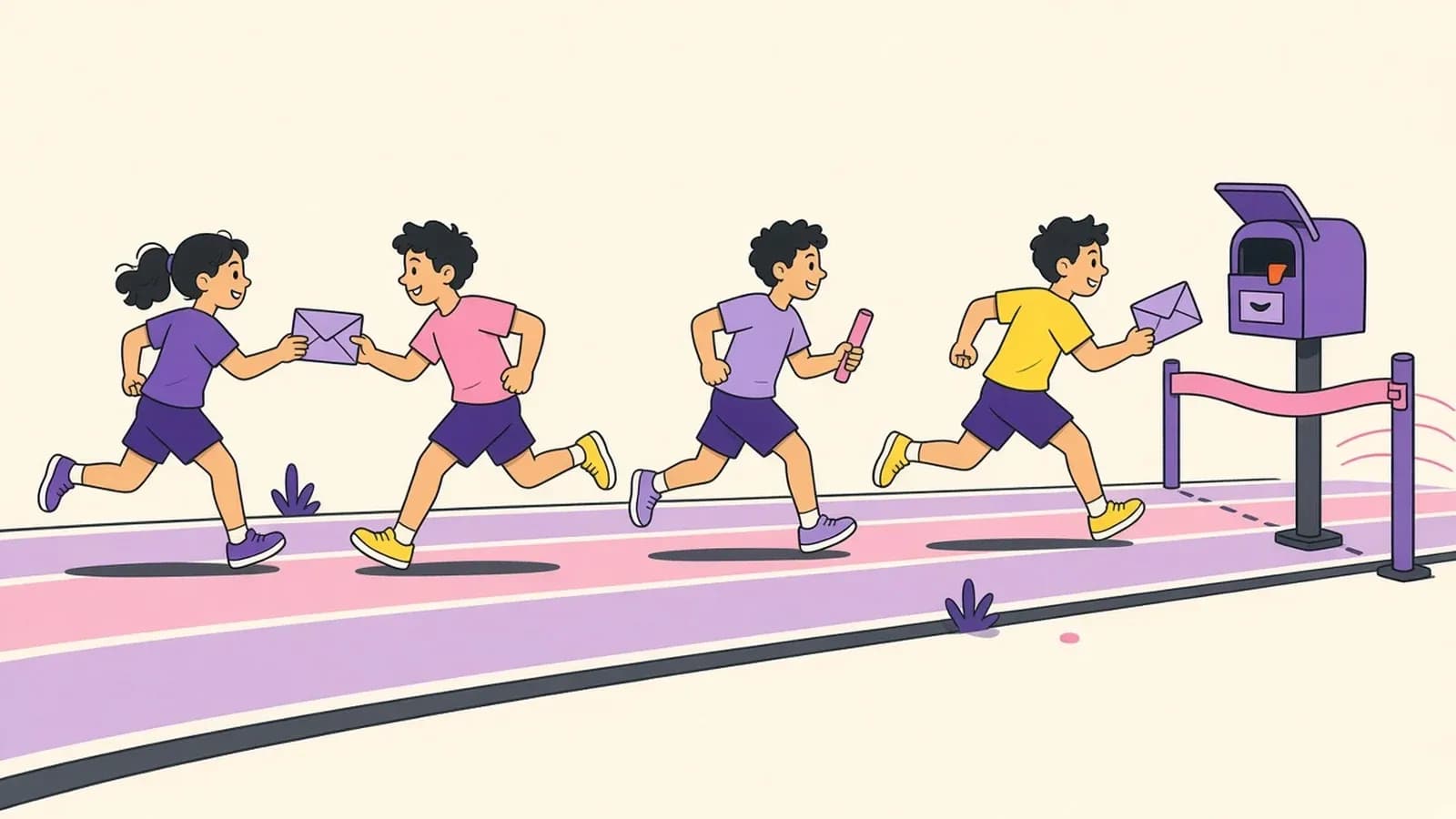
Email one doesn't have to book anything. Among contacts first emailed from February to August 2026, 59% of the real people who wrote back answered a follow-up, not the opener. Per email sent, the fourth email earned 0.99x the first email's human reply rate: a tie. You have a whole sequence to reach the meeting. The first email only has to start the conversation. Our reply data by sequence step has the full breakdown.
What CTA should each email in a sequence use?
The ask grows as the person warms up. Until they reply, every email asks whether. After they reply, you ask when.
| Stage | What the CTA asks | Example | Link? |
|---|---|---|---|
| Email 1 | Whether they want the offer | "Want me to show you how [peer] set it up?" | No |
| Emails 2 and 3, no reply | The same offer, with a new angle or proof point | "Want the one-page summary of [peer]'s first 90 days?" | One at most, and only when the asset is the offer |
| Last email | The offer from a second angle, plus a plain way out | "Want to see the [second use case] version instead?" | No |
| They replied "tell me more" | A specific time | "Tuesday 2pm or Wednesday 10am ET?" with your booking link as a backup | Yes |
| Inbound lead, referral, or they asked for your calendar | The meeting | "Here's my calendar, or send me two times." | Yes |
| They sent their own scheduling link | Nothing new. Book it | - | - |
- The reply is where the specific time pays off. Gong's 37% came from deals already underway, and a positive reply is the first step toward one: they've agreed to talk, so a concrete slot saves them a step. Send it the same business day. In Kenso, replies are tagged as they land: positive, negative, out of office or wrong person. Ken drafts replies in your voice for you to review and edit, so the "Tuesday 2pm or Wednesday 10am?" email can go out the day the yes arrives. For the rest of that conversation, see how to handle cold email replies.
- The last email isn't a guilt trip. "Should I close the loop?" and "Did I lose you?" ask the reader to manage your pipeline for you. Give them one new reason and an easy out instead. Our breakup email templates work that way.
- When they send their link, use it. About 1 in 28 non-automated replies our campaigns received from November 2025 to September 2026 included the prospect's own scheduling link. Close to two thirds of those links were Calendly. Buyers live in these tools. They just don't want one from a stranger.
- Meeting asks have their place. For referrals, inbound leads and peers, our meeting request templates have seven versions.
Which soft CTAs actually work?
Soft isn't the same as good. The interest asks that work are about your offer. The ones that fail ask about the reader's situation, or ask nothing at all.
| Ending | The problem | Try instead |
|---|---|---|
| "Thoughts?" | Asks for an opinion, which takes effort to write, so it's easy to put off | "Want me to send the breakdown?" |
| "Let me know if you're interested." | It's a statement. There's nothing to answer | "Interested in seeing how it works?" |
| "Do you have a process for [X] today?" | A survey question. Even a yes leaves you one email away from the offer | "Want to see how [peer] handles [X]?" |
| "Reply 'yes' and I'll send it over." | Reads like an automation trigger, not a person | "Want me to send it?" |
| "Should I close the loop?" | Guilt. It hands the reader your list cleanup | One new reason, then a plain opt-out |
| "Open to a quick call? Or I can send a deck." | Two asks. The reader picks neither | Keep the one that matters |
| "15 minutes this week?" | A duration is still a time ask | Say how short it is in the body if it matters, and ask about the offer |
| "Can we talk before Friday? Pricing changes next week." | Deadline pressure from a stranger reads as a tactic | Give a deadline only when it's real, and say why |
10 cold email CTA examples, rewritten from meeting asks to interest asks
Each "before" is a meeting ask we see all the time. Each "after" asks for the same thing one step earlier.
| # | Before: meeting ask | After: interest ask | What changed |
|---|---|---|---|
| 1 | "Are you free for 30 minutes this Thursday?" | "Want to see what this would look like at {company}?" | Asks about the offer, not their Thursday. A walkthrough would still be a time ask |
| 2 | "Book a time on my calendar: [link]" | "Want me to show you how [peer] set it up?" | No link and no form to fill in |
| 3 | "Can we hop on a call about your outbound?" | "Want the teardown we did of [peer]'s sequence?" | Offers something to send. The link goes in your reply |
| 4 | "When works for a quick chat next week?" | "Want to see how [peer] did it, or not a priority yet?" | Gives an easy no, so silence turns into an answer |
| 5 | "I'd love to set up a demo of our platform." | "Want me to record a 2-minute video of it on your site?" | A statement becomes a question, and the demo goes to them |
| 6 | "Let me know if you'd like to schedule a meeting." | "Want me to send pricing for a team your size?" | Something concrete to say yes to |
| 7 | "Can I get 20 minutes with you and your Head of Sales?" | "Is this yours, or does [likely team] own it?" | Asks for a name, not two calendars |
| 8 | "Can you do Tuesday at 4pm or Wednesday at 10am?" | "Want to see the numbers from [peer]'s first quarter?" | Saves the two times for after they reply |
| 9 | "Would you be open to a 15-minute discovery call to explore synergies?" | "Want to see how [peer] cut [problem] by [number]?" | Drops the jargon and names the outcome |
| 10 | "Grab a slot here, or reply and I'll send times. Happy to share a case study too." | "Want me to send the [peer] case study?" | Three asks become one |
Every "after" names a thing (a teardown, a video, pricing, a case study, a peer's numbers), takes a one-word answer and leaves the reader's calendar alone. Personalize the thing, not the wording around it: their company, a peer in their market, their numbers. Use a [peer] name or a number only when it's true.
How do you end a cold email?
Below the pitch, we end a first email with these parts, top to bottom:
- Proof the question can point at. One line with a result, a peer's number or the thing you'd send. Without it, "Want me to show you?" has nothing to show.
- The ask, as a question, on its own line. One sentence. No time and no link. Keep the whole email short too: we'd keep a first email between 50 and 125 words, for the reasons in our cold email length data.
- A plain sign-off. Your first name, or "Best," then your name. Title and company underneath, in plain text. Leave the calendar link out of a cold signature. It's a link, and it repeats the meeting ask in every email.
- A P.S., only if it earns its place. Use it for a personal line or a proof point, never a second ask. A P.S. that says "or grab a time here" turns one ask into two.
- An opt-out line. US law (CAN-SPAM) requires a way to opt out and your postal address in commercial email, B2B included. "Reply if you'd like me to stop emailing" covers the opt-out without competing with your ask. Our free compliance checker checks an email against CAN-SPAM, GDPR, PECR and CASL.
Put together, the end of a first email looks like this:
[Peer] cut [problem] by [number] after we changed one step in their [process].

Want me to show you what we changed?

Alex
Head of Growth, [Company]
[Postal address]

Reply if you'd like me to stop emailing.
Does the sign-off change reply rates?
Probably less than the sign-off rankings suggest. The numbers they quote, 65.7% of threads answered for "thanks in advance" and 51.2% for "best", come from Boomerang's January 2017 study. It looked at more than 350,000 threads from the mailing lists of over twenty online communities, many of them people asking for help. The average response rate in that sample was 47.5%.
Cold email is a different world. Hunter's 2025 data puts the average cold sequence reply rate at 4.5%. A sign-off that helped forum members get answers tells you little about a stranger deciding whether to answer a pitch. "Thanks in advance" also assumes a reply you haven't earned yet. Pick the sign-off you'd use with a colleague and spend your effort on the ask.
Should a cold email CTA be a question, a link or a button?
A question, in plain text, almost every time.
- Reply-based CTAs start sales conversations. A reply is a person.
- Click-based CTAs, a link to a resource, fit a follow-up where the asset is the offer, such as a case study or a short video. Make it the email's only link. Clicks are worth less than replies, and security scanners open links before people do, so click counts on cold email run high (the calendar-link post has the sources).
- Buttons belong in newsletters. A styled button tells the reader it's a campaign, not a person.
If you do send a link, show the real address and turn click tracking off, so the reader and their filters see where it goes, not a redirect. In Kenso, "A plain text email never carries a click-tracking link."
How many CTAs should a cold email have, and where do they go?
One, on the last line before your sign-off.
Some guides add a second ask near the top for skimmers. We don't. Every ask is a decision, and a reader handed two of them often makes neither. If nobody reaches your last line, cut the email, not the ask.
Change the wording across a sequence, not the offer. Email 1 might ask "Want me to show you how it works?" and email 3 "Want the two-page version?". Same offer, different door.
Our free cold email grader scores how clear your call to action is and flags an ask that's missing, doubled or buried. It also rates a first email with no links as the best case on its link check.
How do you test a cold email CTA?
- Split one list at random and send both versions on the same days. Before-and-after comparisons mislead. In our link data, a 2.3x gap from a before-and-after switch didn't hold up as one clear number once we held the timing fixed.
- Change only the ask. Same subject line, body, sender and list.
- Count human replies, then positive replies and meetings. Leave auto-replies out. Ignore opens: in Kenso, "Campaign emails never carry an open-tracking pixel. Opens are not tracked and are never reported." Ignore clicks when the CTA is a question.
- Size the test before you start. At a 2% reply rate, each version needs about 3,830 contacts to catch a 50% lift 8 times out of 10, and about 21,100 to catch a 20% lift. Our A/B test calculator runs the math on your own numbers.
That last step decides what's worth testing. "Want me to send it?" against "Should I send it over?" is a small difference at best, and small differences need tens of thousands of contacts per version. Test asks that differ in kind: an interest question against an offer to send something. For what to test first, see our guide to cold email A/B testing.
FAQ
What makes a good cold email CTA?
One yes-or-no question about your offer, such as "Want me to show you how [peer] set it up?". It names a thing, takes a one-word answer, and carries no time and no link.
Should a cold email ask for a meeting?
In the first email, ask for interest instead. In Gong's data, a specific-time ask led to a meeting 15% of the time on cold emails, against 30% for an interest ask. Once a deal was underway, the specific time won at 37%.
Should I put a calendar link in a cold email?
Not in the first one. Send it after a reply, next to two specific times. Our calendar-link post has the data.
How long should a cold email CTA be?
One line. The ten rewrites above run from 8 to 12 words. If your ask needs two sentences, the offer isn't clear yet.
Does this work for LinkedIn messages too?
It does. Ask whether they want the thing, and share a link or a time only after they answer. A LinkedIn message is shorter than an email, so the ask is often most of the message.