
How SEO Agencies Get Clients with Cold Email (Skip the Audit)
SEO agencies win clients by emailing at a trigger moment with one checkable fact. We checked 100 B2B sites: 98 had a classic audit flaw. 21 had a specific one.
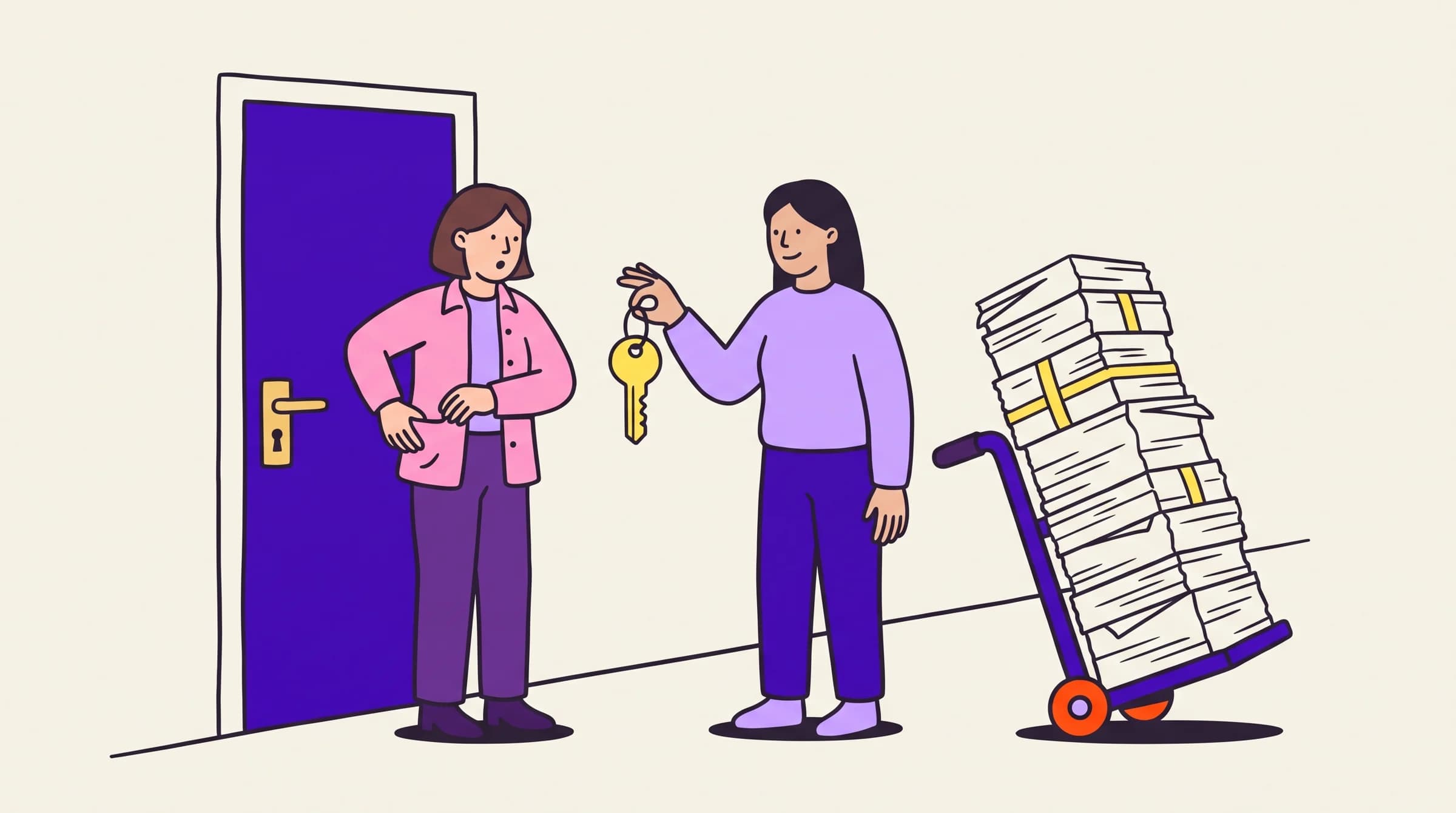
Google's own page on hiring an SEO tells business owners to "be wary of SEO firms and web consultants or agencies that email you out of the blue." That's the bar your email has to clear.
SEO agencies win clients with cold email by writing right when search becomes the prospect's problem, like a drop after a Google update, a new site, a new marketing hire, or pages that are broken or hidden from Google. Open with one fact they can check in ten seconds, not a generic audit.
To see why the audit template fails, we checked 100 randomly picked B2B websites in October 2026. 98 had at least one of the five flaws a typical "I audited your site" email points out. Only 21 had a specific, checkable problem, like broken pages in their sitemap or pages hidden from Google.
A flaw that 98 out of 100 sites share is not a finding. It's a mail merge.
Why does the "I audited your site" email get ignored?
The "I audited your site" email gets ignored for two reasons. Owners have been warned about it, and the flaws it lists are true of almost every site.
Google's Do you need an SEO? page, checked October 2026, even quotes a spam email Google got: "Dear google.com, I visited your website and noticed that you are not listed in most of the major search engines..." Then it tells readers to treat unsolicited SEO email like "burn fat at night" diet pills.
And Google's own docs play down the most common audit findings:
- Long titles. The title link docs say "there's no limit on how long a
<title>element can be." Long ones just get cut off in results. - Heading counts. The SEO starter guide says "there's also no magical, ideal amount of headings a given page should have."
- Missing meta descriptions. The snippet docs say "snippets are primarily created from the page content itself."
So your audit tells the prospect two things. You ran a tool, and you sent the same email to a thousand other people.
Outbound can still work. In SparkToro's 2025 State of Digital Agencies survey, published February 2026, 59% of agencies had tried it. 9% of those called it very effective and 33% not effective at all. My guess is that much of that gap is the first line.
What did we find when we checked 100 B2B websites?
We picked two groups at random: 50 active US B2B startups from Y Combinator's directory with 25 to 500 people, and 50 established non-software B2B companies from the 2019 Inc. 5000 list, like manufacturers, builders, logistics and IT services firms, with 20 to 1,000 people.
For each site we loaded the homepage and up to 20 random pages from its sitemap, the file that lists a site's pages for Google. That's 1,711 pages. Then we pulled the Chrome UX Report for August 2025 and August 2026, Google's free public data on how real Chrome users experience popular sites.
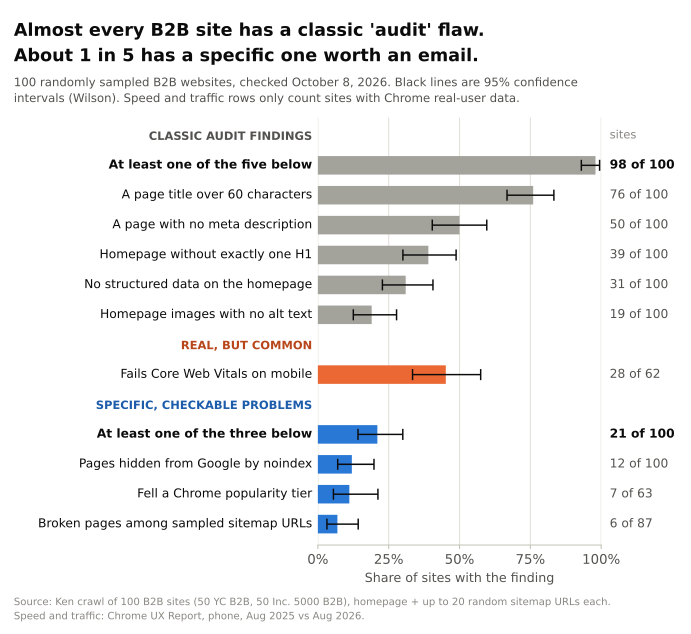
Source: Ken crawl of 100 B2B websites (50 YC B2B, 50 Inc. 5000 B2B), October 8, 2026, 1,711 pages checked; Chrome UX Report, Aug 2025 vs Aug 2026. Bars show 95% confidence intervals.
What stood out:
- The template flaws are everywhere. 98 sites had at least one and 75 had two or more. A page title over 60 characters showed up on 76.
- "Your site is slow" is a coin flip. 28 of the 62 sites with enough Chrome data failed Core Web Vitals on mobile, Google's speed and stability scores from real visitors. That's about the web-wide rate. The 2025 Web Almanac found 48% of mobile pages passed. Only 4 of our sites were in Google's "poor" range.
- The specific problems are rarer. 11 sites listed pages in their sitemap that carry a noindex tag, a line of code that tells Google to keep a page out of search. On most it was one or two pages. On one it was 17 of the 20 we sampled, and another had the tag on its homepage. 6 of the 87 sites with a readable sitemap had broken pages in our sample.
- Specific doesn't always mean big. Count only the bigger cases and it's 13 of 100, about 1 in 8. That means noindex on the homepage or on 3 or more sampled pages, at least 1 in 10 sampled pages broken, or a drop in Chrome's popularity tier.
A hundred sites is a small sample, so treat these shares as rough. The confidence intervals show how rough.
Do startups and older B2B companies have different SEO problems?
Yes, and it changes which trigger you should look for.
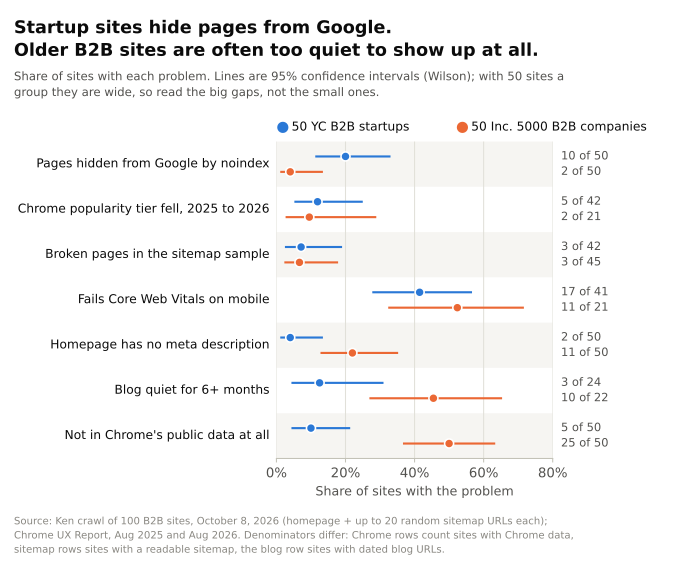
Source: Ken crawl of 100 B2B websites, October 8, 2026 (50 YC B2B startups, 50 Inc. 5000 B2B companies); Chrome UX Report, Aug 2025 and Aug 2026. n per row is on the chart. Lines show 95% confidence intervals.
- Startups hide pages. 10 of the 50 YC sites had noindex pages in their sitemap, against 2 of the 50 older companies. My guess is that fast teams ship new pages and templates all the time, and a stray tag slips through.
- Older companies barely show up. Half the Inc. 5000 sites, 25 of 50, weren't in Chrome's public data at all, which usually means too few visitors. Only 5 startups were missing. And 10 of the 22 older sites with a dated blog hadn't posted in six months.
With 50 sites a group, only the big gaps mean much, and these are the big ones. Selling to startups? Look for indexing mistakes. Selling to traditional B2B? "You lost traffic" is the wrong pitch when there was little traffic to lose. "Nobody can find you" is closer, and a blog that stopped in March is the proof.
Which triggers are worth a cold email?
A trigger is worth an email when it's about this company and not every company, it happened recently, and the prospect can verify it in ten seconds.
| Trigger | How to spot it | What the numbers say | A first line to try |
|---|---|---|---|
| Pages hidden from Google | Noindex tag on sitemap pages | 12 of 100 sites | "17 of the 20 pages I checked in your sitemap tell Google not to index them." |
| Broken pages in the sitemap | Fetch sitemap URLs, look for 404s | 6 of 87 sites | "6 of the 20 pages I checked in your sitemap return 'page not found'." |
| Drop after a Google update | Rank tracker, before vs after rollout | 3 core updates in 12 months | "You lost the top 3 spots for '{keyword}' after the May core update." |
| A competitor passed them | Rank tracker on their 10 best keywords | Not measured | "{Competitor} passed you for '{keyword}' in August." |
| New site or domain move | Launch posts, a new CMS, sitemap dates | 523 days on average to win back traffic after a domain move | "Congrats on the new site. A few old URLs other sites link to now 404." |
| New head of marketing | LinkedIn job changes | Not measured | "Saw you started in August. Here's where organic stands vs 3 competitors." |
| Fell a Chrome popularity tier | Chrome UX Report rank, this year vs last | 7 of 63 sites in 12 months | "Google's public Chrome data moved your site down a popularity tier this year." |
| Blog went quiet | Sitemap dates on blog URLs | 13 of 46 sites, 6+ months | "Your last blog post went up in March." |
The 523 days come from Dan Taylor's study of 892 domain migrations in Search Engine Journal, January 2025. 17% of those sites hadn't recovered after 1,000 days. And Google's Page indexing report help recommends "fixing only 404 errors that you link to yourself or list in a sitemap," so a broken sitemap page is a fix Google would sign off on.
I'd rather have two triggers at once than one. We cover stacking them in signal-based outbound and the new-hire window in job-change outreach.
How do Google updates give an SEO agency a reason to email?
Google updates give you a dated reason to write, and they come often. Google's Search Status Dashboard, checked October 8, 2026, lists 37 confirmed ranking updates since January 2022. That's one about every 7 weeks.
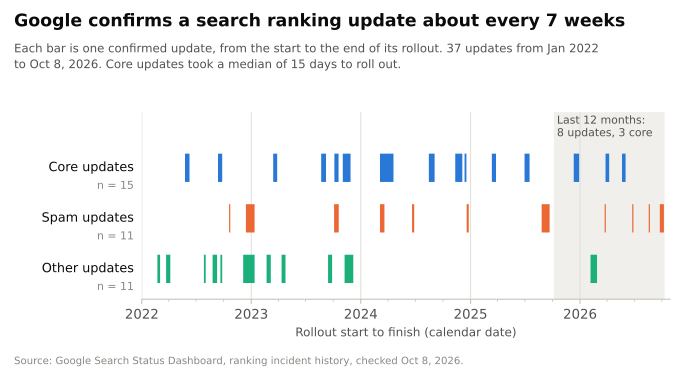
Source: Google Search Status Dashboard ranking history, checked October 8, 2026, n = 37 updates (Jan 2022 to Oct 2026).
Core updates are the ones I'd watch, because they change how Google ranks pages across the board. There were 15 since 2022, with a median rollout of 15 days, and three in the last 12 months: December 2025, March 2026 and May 2026.
Here's how I'd use them:
- Wait until the dashboard marks the rollout finished. Rankings bounce mid-rollout.
- Compare before and after rankings for the pages that bring the prospect leads, in Ahrefs or Semrush.
- Email within 2 to 4 weeks, while someone inside is still asking what happened.
No paid tool? Chrome's public data sorts every site with enough visitors into a monthly popularity tier, like top 1 million or top 5 million. Treat a drop as a reason to look closer, not proof. Tiers are wide, they count all visits and not only search, and in our sample almost as many sites rose a tier as fell, 6 against 7.
What should an SEO agency offer instead of a free audit?
Offer something smaller than an audit, not bigger. The best offer is the second half of the finding you opened with.
- The rest of the list. "Want the full list?" costs them nothing, and a one-word reply is the yes.
- A fixed-price fix. "We can fix the 6 broken pages this week for a flat fee." A small first invoice proves you deliver. The retainer comes after.
- A recovery read. After a core update, show which pages lost and what the pages that replaced them have that theirs don't.
- A one-page plan for a new marketing lead. Their organic traffic next to 3 competitors, ready for their first CEO meeting.
Skip the 40-page PDF. It gives away the thinking you want to be paid for.
Who should an SEO agency email at the company?
Email the person who owns the problem. At small companies that's usually the founder.
Our sending data backs this up. Among contacts first emailed June 1 to August 3, 2026, across 16 client workspaces, founders and C-level were about 1.9 times as likely as VPs, directors and managers in the same campaign to write back as a human. The 95% confidence range runs from about 1.4 to 2.4 times.
Part of that is company size. 42% of the founders and C-level worked at companies of 1 to 10 people, against 10% of the VPs, directors and managers. Compare people at the same company size and the gap shrinks to about 1.4 times. At 201 to 1,000 employees it's gone.
The middle also hides behind auto-replies. When a VP's, director's or manager's inbox answered, 9 times in 10 it was an out-of-office or other auto-reply, against about 7 in 10 for founders and C-level. These emails went out in summer, which inflates both shares, so read the gap, not the exact numbers.
So at companies under 50 people, email the founder. At a few hundred employees the CEO won't buy SEO, so write to the head of marketing. When the trigger is a new marketing hire, email that person.
How many prospects do you need to email for 1 or 2 new clients a month?
Work backwards from your close rate. In SparkToro's survey, 39% of agencies said they close 25% to 49% of qualified leads, the most common answer, and another 32% close 50% to 74%. If you close 1 in 3 and want 2 new clients a month, you need about 6 sales calls.
How many prospects that takes depends on how many calls you book per 100 people you email. Plug in your own number:
| Sales calls per 100 prospects emailed | Close 25% | Close 33% | Close 50% |
|---|---|---|---|
| 0.5 | 1,600 prospects | 1,200 prospects | 800 prospects |
| 1 | 800 prospects | 600 prospects | 400 prospects |
| 2 | 400 prospects | 300 prospects | 200 prospects |
Prospects to email per month for 2 new clients. Calls needed = 2 ÷ close rate.
Now add the trigger. In our sample about 1 in 5 sites had a specific problem worth writing about, and about 1 in 8 had a big one. So 600 good prospects means screening 3,000 to 4,600 sites. Your trigger rate sets the size of your list. You screen a lot more and send a lot less. More on that in why your cold email list is smaller than you think.
Software is good at the screening. A human should still write the first line. That's how we work at Ken. We run cold email and LinkedIn outreach for B2B companies, done for you, on infrastructure we own. AI screens the prospects, human copywriters build the frameworks, and a person approves before anything sends. Here's how it works for agencies.
Frequently asked questions
Is it legal to cold email businesses about SEO services?
In the US, yes, if you follow CAN-SPAM. The FTC's compliance guide says "the law makes no exception for business-to-business email," and you must honor opt-outs within 10 business days. The EU, UK and Canada are stricter, so see our side-by-side of opt-out rules. This is general information, not legal advice.
How long does it take to land an SEO client from cold email?
Plan on one to three months. New sending domains need 2 to 4 weeks of warmup, and in SparkToro's survey about 55% of agencies said a deal takes 1 to 6 weeks from first contact to close.
How many follow-ups should an SEO cold email sequence have?
Three or four, each adding one new fact. In our sending data, 59% of people who wrote back as a human did it after a follow-up, and the fourth email drew human replies at about the same rate per email as the first. The data covers contacts first emailed February 25 to August 3, 2026, across 17 client workspaces.
Does the free SEO audit ever work?
Yes, after someone replies. Once a prospect asks "what did you find?", a short audit on the one problem you raised is a fine next step. As an opener, it's the email they've learned to delete.
Get your first campaign built free
If you want trigger-based outreach without building the screening yourself, we'll build your first campaign for free. That includes the list, the triggers and the copy, and you approve all of it before anything sends. Start your free campaign.